
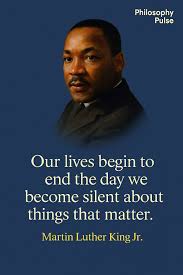
Equality work rarely looks like a big moment. It looks like persistence.
It happens in small rooms and ordinary conversations. It happens when people stay at the table long after the “awareness session” is finished. It happens when someone decides to keep going, even when the institution moves slowly, when there is friction, or when it feels easier to stay silent.
And crucially, equality work begins with something that is still too often underestimated: listening.
Listening is not passive. Listening is a form of intervention. It is how we decide whose experiences count as evidence. It is how we detect what is being normalised, excused, or ignored. It is how we resist the tendency to reduce equality to slogans, or to treat marginalised communities as topics rather than people with knowledge.
In education, listening is not a “soft skill”. It is a method. It is a disciplinary practice. It is also a form of accountability, because when we genuinely listen, we begin to notice the gap between an institution’s public narrative and the realities that students and communities live with.
This matters because too much equality work, even when well-intentioned, gets stuck in a charity frame. Charity can soothe guilt. It can reassure us that we are “doing something”. But charity rarely asks the hardest questions: Who holds power? Who benefits? Who is excluded? What structures make injustice predictable?
Equality demands something deeper than helping. It demands solidarity, and solidarity begins when we stop treating injustice as unfortunate misfortune and start recognising it as structured and produced.
That is where Global Justice Education becomes helpful. It gives students and educators the language and tools to connect local realities with the global systems shaping them. It refuses the comforting illusion that inequality happens “somewhere else” and that our role is simply to feel empathy at a distance.
Because the truth is: the local and the global are inseparable.
The same global forces that shape poverty, conflict, displacement and climate injustice also shape experiences in Ireland, through migration policy, housing inequality, labour precarity, racialisation, educational access and institutional belonging. A lecture theatre in Cork is not outside the world. It is one of the places where the world is interpreted, and where futures are imagined.
This is why we treat the classroom as a justice space: not as a neutral container for knowledge, but as a place where students practise the ethical and political responsibilities of citizenship.
In our work, students engage with urgent global justice realities, war and occupation, forced migration, racial injustice, food insecurity, climate breakdown, not as distant case studies, but as questions that require critical thinking and moral courage. They explore not only the “facts”, but the frames that shape public responses: whose pain becomes visible, whose suffering is doubted, and whose lives are made administratively precarious.
Importantly, students are not asked merely to have opinions. They are asked to examine systems, positionality and action. They are invited to ask: What is my relationship to this issue? How do I benefit? What am I complicit in? What would responsible action look like—personally, professionally, institutionally?
And we use methods that allow student voice to move beyond the standard academic script. Creative and participatory approaches—storytelling, oral history, dialogue, artefact-making, exhibition—help bring complexity into the room without flattening it. These methods do not replace theory; they deepen it. They enable students to express insight in ways that are embodied, relational and socially meaningful.
This is quiet work. It is not glamorous. It is not quick.
Its outcomes are often subtle but significant: a student who finally has language for something they have experienced; a group that learns to hold disagreement without dehumanising; an educator who rethinks what counts as “rigour”; a department that begins to notice which voices are missing from decision-making.
This is what partnership with Community Foundation Ireland makes possible: sustained work rooted in values, not performative gestures; work that centres people and lived experience while staying attentive to place and planet; work that links local action to global solidarity.
Equality, in the end, is not only a destination. It is a daily practice. It is a way of working. A method of learning. A decision to keep listening, keep questioning, and keep acting, especially when change is slow.
Equality work rarely looks like a big moment.
It looks like persistence.
