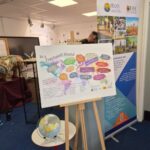
What might global justice education look like if we took it out of the classroom and invited the public into the conversation?
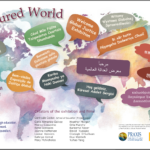
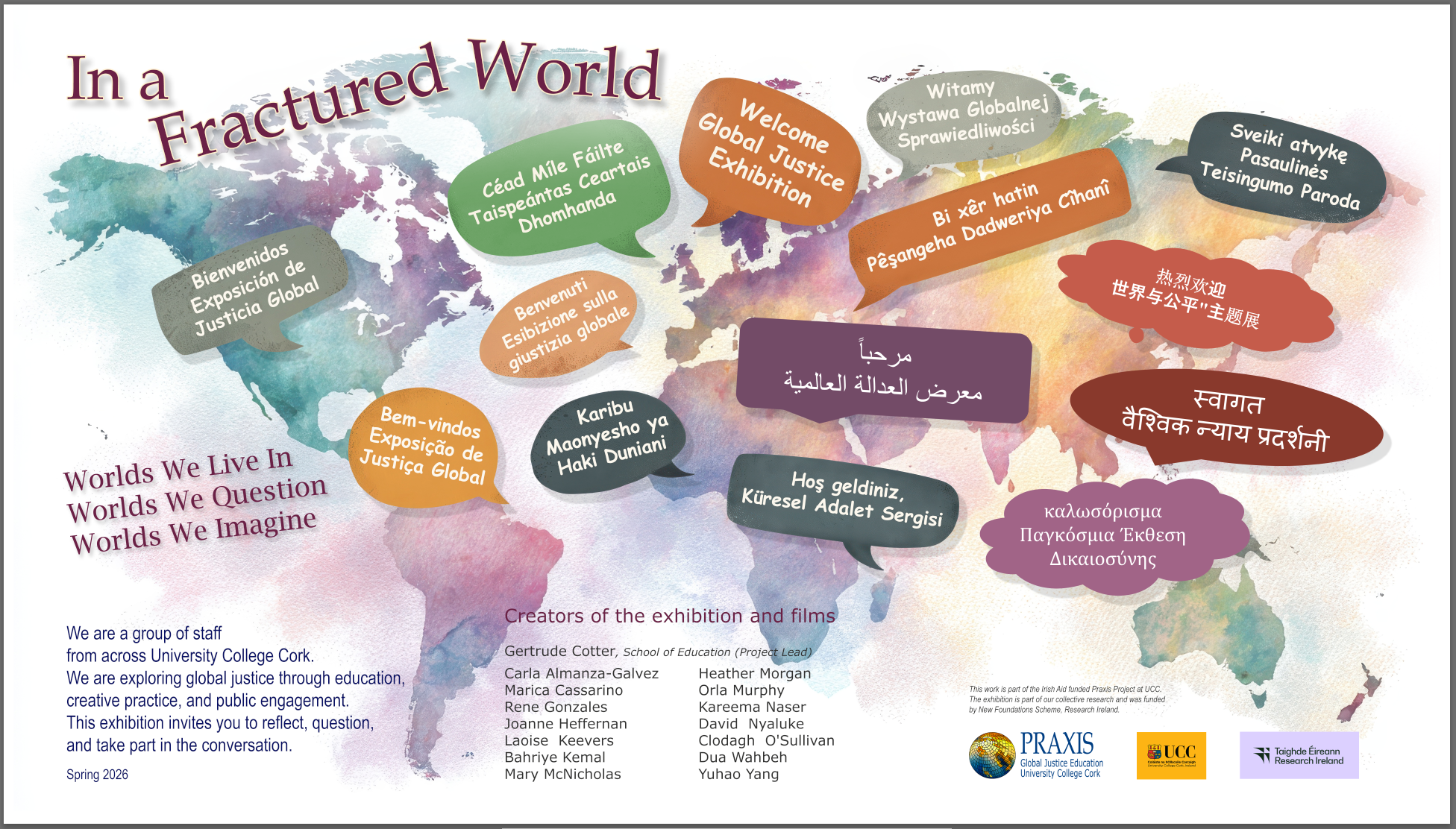
That question – what happens when global justice education moves beyond the classroom – was at the heart of In a Fractured World: Worlds We Live In, Worlds We Question, Worlds We Imagine, an interactive exhibition created by UCC staff and presented in Cork City Library during May 2026 before moving to University College Cork for Praxis week. We are grateful to New Foundations for funding this very impactful project.
On this page
1. Purpose of the Films and Exhibition
2. Learning Through Film-making
3. Short Films
4. Putting It All Together: The Exhibition
5. Launching In a Fractured World
6. Public Engagement: Listening and Responding
7. Why a Public Library?
8. Bringing the Exhibition Back to UCC
9. What Did Participants Learn?
10. What Happens Next?
11. A Model for Global Justice Education
12. Credits and Acknowledgements
13. Images
1. Purpose of the Films and Exhibition
Bringing together short films, visual installations, posters, books, artwork, quizzes, timelines and opportunities for public response, In a Fractured World explored issues ranging from migration, care and climate justice to education in Gaza, alternative ways of understanding community and development, and the possibility of hope in difficult times.
The exhibition was part of a wider collaborative project led by Dr Gertrude Cotter at University College Cork, working with Cork City Library and Cork Community Media Hub. It was supported by Taighde Éireann – Research Ireland through the New Foundations programme, whose funding made it possible to bring together Global Justice Education, professional filmmaking, creative practice and sustained public engagement.
The work was developed within the context of UCC’s Praxis Project, funded by Irish Aid, which works to strengthen Global Citizenship and Development Education across the university.
But the exhibition itself began with people learning together.
2. Learning Through Film-making
One of the distinctive features of the project was its participants.
They were UCC staff participating as learners in two Praxis Global Citizenship Education programmes: the 15-credit master’s-level micro-credential Global Citizenship and Development Education for Educators and the Praxis Digital Badge in Global Citizenship Education.
Twelve UCC staff, together with two Palestinian colleagues, contributed to the exhibition and films.
They brought different disciplinary, professional and personal perspectives. During the programmes, they explored critical and decolonial approaches to Global Citizenship Education alongside issues including colonialism and its legacies, gender and the care economy, environmental and climate justice, human rights and forced migration, conflict and education, global inequality, media representation, voice and ethical communication.
Then came a different challenge:
How could they communicate some of these complex questions to somebody who had not taken the course?
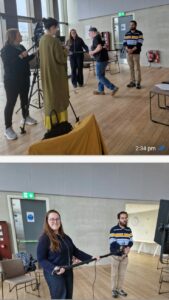
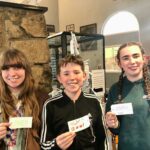
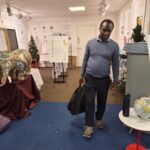
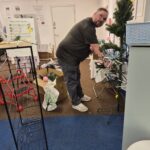
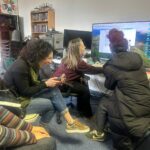
Photo: Participants learning film-making
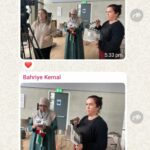
Working with Cork Community Media Hub, participants received professional support in visual storytelling, filming, sound and editing, alongside guidance on the practical and ethical responsibilities involved in working with contributors.
The filmmaking process therefore became much more than learning how to operate a camera.
Participants grappled with questions of voice, consent, representation and power. Who gets to tell a story? How can somebody’s lived experience be represented without speaking for them? How do we make participation genuinely accessible? What responsibility does a filmmaker have to the people whose stories appear on screen?
In the work on the care economy, for example, people with lived experience were enabled to speak directly about care rather than having their experiences interpreted for them. Questions were shared in advance, filming was adapted to individual needs, consent procedures were carefully followed and language preferences were respected.
These may appear to be practical decisions. They are also Global Justice Education in practice.
They require us to think about who holds power, whose knowledge is valued, who is visible, who is heard and how we create spaces in which people can represent their own experiences.
Short Films
This project included the creation of four short films on the themes chosen by us to explore global/local justice issues. We are very grateful to Cork Community Media Hub who in what was a short timeframe managed to facilitate us to learn basic film-making skills and later include us in the editing of the films at their studios.
Each film explores a different aspect of global justice, drawing on lived experience, cultural perspectives and questions that emerged through the course. Together, they consider themes including care, migration, education, Palestine, environment, identity and radical hope. The films accompanied the artefacts at the pop-up exhibition so that each set of artefacts and poster was accompanied by a film.
The films are intended as starting points for reflection and conversation rather than as complete answers. They invite viewers to listen, question, connect local and global experiences, and consider how we might imagine more just and caring futures.
Education in Gaza: Learning in the Shadow of War
What does education mean when schools have been destroyed, families displaced and children are living with the daily realities of war? This short film focuses on the experiences of children and young people in Gaza, exploring what happens to education when the conditions needed for safe learning have been devastated.
Through images and voices from Gaza, the film draws attention not only to the destruction of educational infrastructure, but to the profound effects of fear, bereavement, displacement and insecurity on children’s ability to learn. It reminds us that the right to education cannot be separated from children’s other fundamental rights — including their rights to safety, dignity and life.
Yet the film is also about the determination to continue learning. Amid extraordinary circumstances, children, families and educators continue to hold on to education and to the possibility of a different future. Their persistence should not romanticise the conditions they are being forced to endure; instead, it raises important questions about education, justice and the responsibilities of the international community.
Ultimately, the film asks us to see education in Gaza not simply as schooling, but as part of a wider struggle to protect childhood, sustain hope and imagine a future beyond war.
Ancient Wisdom for a Fairer and Greener World
See the film here:
https://vimeo.com/1186741393/872895afb5?fl=tl&fe=ec
What might older traditions of thought teach us about some of today’s most urgent global challenges? In this short film, David Nyauke, Yuhao Yang and Rene Gonzales explore ideas drawn from different cultural traditions, including Ubuntu, Meitheal and Confucian thought.
Against the backdrop of environmental destruction, inequality and societies increasingly shaped by individualism and profit, the film asks whether older ways of understanding our relationships with one another and with the world around us might offer something important. Ideas of community, mutual care, shared responsibility, reciprocity and social harmony emerge across traditions originating in Africa, Ireland and China.
Rather than presenting ancient wisdom as a simple solution to contemporary problems, the film invites us to consider what may have been lost, and what might be recovered, as we imagine a fairer, greener and more interconnected world.
Children have been forced to care for their families after losing parents. They care for younger siblings, for neighbors, even for orphaned children who are not related to them.
This is not only survival. It reflects a moral tradition deeply rooted of and in our Islamic faith. Care is how to remain a human.
Radical Hope
https://vimeo.com/1186739606/215a098da7?fl=tl&fe=ec
Radical Hope
What does it mean to hope in a world marked by displacement, conflict and injustice? Radical Hope explores hope not as passive optimism, but as something that is practised through belonging, solidarity, care and action.
Beginning in Cork, the film reflects on the experience of finding home in a new place. Cork is described as a “rebel city” — a place whose history of struggle and resistance can resonate with people who have themselves experienced displacement. The film draws connections between different histories and communities, including Syrian and Kurdish experiences of resistance and the Irish experience of struggle for freedom.
But radical hope is not presented simply as an idea or historical inheritance. It is created in everyday encounters: in making space for others, listening, learning names and stories, sharing care and building relationships. Hope, in this sense, becomes something people do together.
The film also connects Cork directly to Gaza. A ship that once sailed from Gaza and is now in Cork becomes a powerful symbol of connection between places. As the film turns towards the devastation in Gaza and the collapse of humanitarian protections, that connection becomes a call to responsibility rather than simply an expression of sympathy.
Radical Hope ultimately asks what it means to belong to one another across borders and histories. Its answer is quietly challenging: hope survives when it becomes collective practice — when solidarity moves beyond words and becomes care, responsibility and action.
Voices of the Care Economy
See the film here:
https://vimeo.com/1186737957/3217b548ae?fl=tl&fe=ec
Voices of the Care Economy
What does care mean, who provides it, and how is it valued? Voices of the Care Economy explores care not simply as an act of kindness, but as a question of responsibility, dignity, solidarity and global justice.
Through personal testimony, the film brings often invisible caring relationships into view. Karen, a mother of four who also works full-time for a charity, speaks about supporting her youngest son, Liam, who was born with Down syndrome. Her experience highlights the essential work undertaken every day within families and communities, much of which remains insufficiently recognised within conventional understandings of work and the economy.
The film also extends the idea of care across very different cultural and political contexts. In Palestine, children who have lost parents are described as taking responsibility for younger siblings, neighbours and orphaned children outside their own families. In circumstances of profound loss and insecurity, care becomes more than an individual responsibility: it is presented as a social and moral practice, deeply connected to community and faith.
By bringing these experiences together, the film asks us to reconsider what we mean by the care economy. It draws attention to forms of labour, responsibility and interdependence that sustain human life but are frequently overlooked or undervalued.
At its heart is a simple but powerful proposition expressed in the film: “Care is how we remain human.” In this sense, care is not peripheral to questions of global justice. It is one of their foundations.
3. Putting It All Together: The Exhibition
The exhibition that emerged was deliberately not organised around a single issue or a single answer.
Instead, visitors encountered seven principal strands, each offering a different route into questions of global justice.
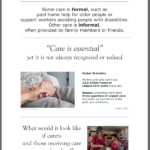
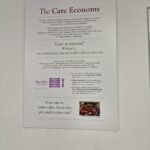
The Care Economy explored the often invisible labour of caring and its connections to gender, disability, economic systems and social value.
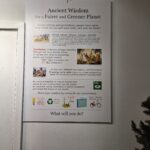
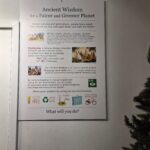
Ancient Wisdom for a Fairer and Greener Planet asked what contemporary societies might learn from ways of thinking that challenge individualism, exploitation and unlimited consumption.
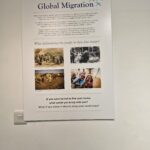
Global Migration connected contemporary forced displacement with Ireland’s own histories of migration and invited visitors to question how and why we distinguish between different people on the move.
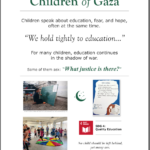
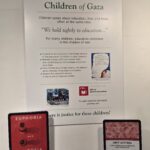
Voices from the Children of Gaza centred Palestinian children’s experiences of education, fear, resilience and hope, including through a short film addressing violations of children’s right to education.
Radical Hope in a Rebel City turned towards Cork itself, asking where hope, resistance and collective action might be found in the history and contemporary life of the city.
A Global Justice and Development Education Timeline placed contemporary concerns within a longer history of movements, ideas and struggles for change.
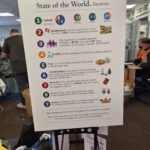
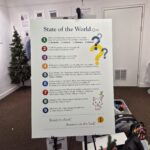
And the State of the World Quiz invited visitors to test what they thought they knew about the world – and perhaps discover that some of their assumptions needed revisiting.
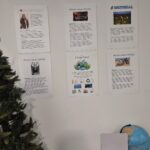
Alongside these were displays exploring Meitheal, Confucius, Ubuntu, Ujamaa and Undugu, and the idea that humanity shares responsibility for one planet.
Together they posed a larger question:
Are the dominant ways in which we organise our societies the only ways available to us?
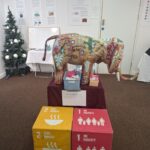
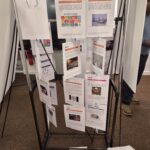
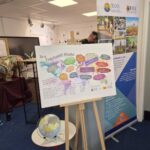
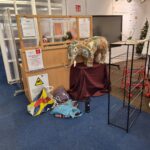
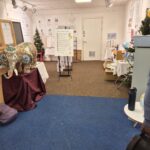
PHOTO:Welcoming our Visitors. Note … there are more images of the exhibition at the end of this blog.
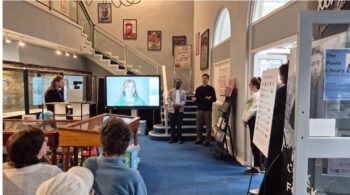
4. Launching In a Fractured World
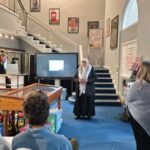
The exhibition formally opened at Cork City Library on 5 May 2026 and remained there for approximately a month.
This extended presence mattered. Rather than holding a once-off event, the project created a public learning space that people could encounter informally and in their own time.
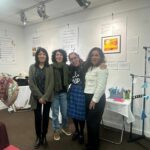
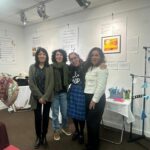
[PHOTO: Launch, participants and visitors]
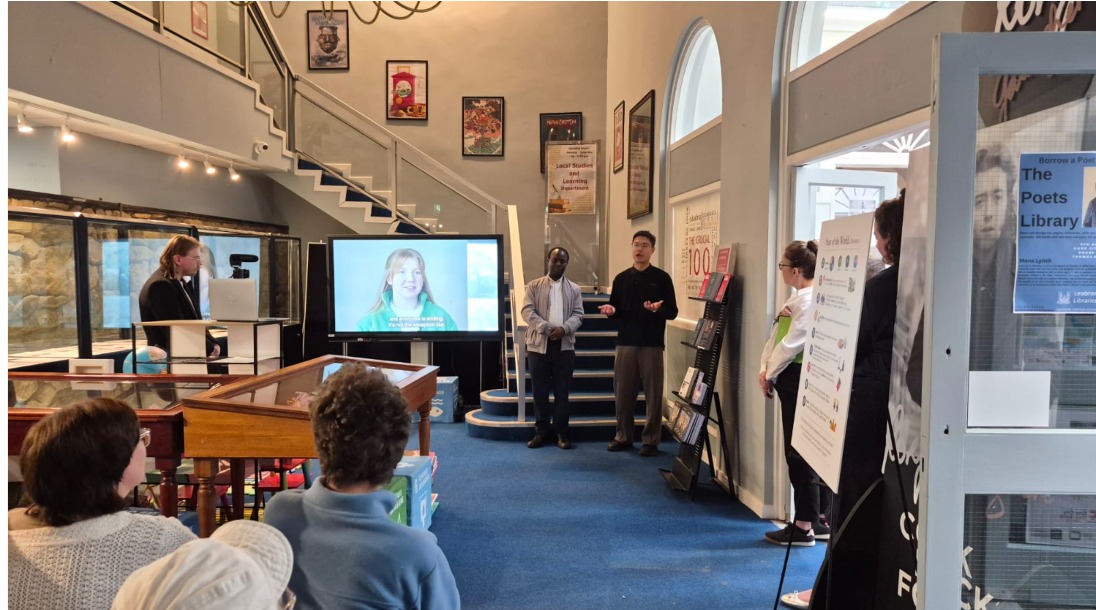
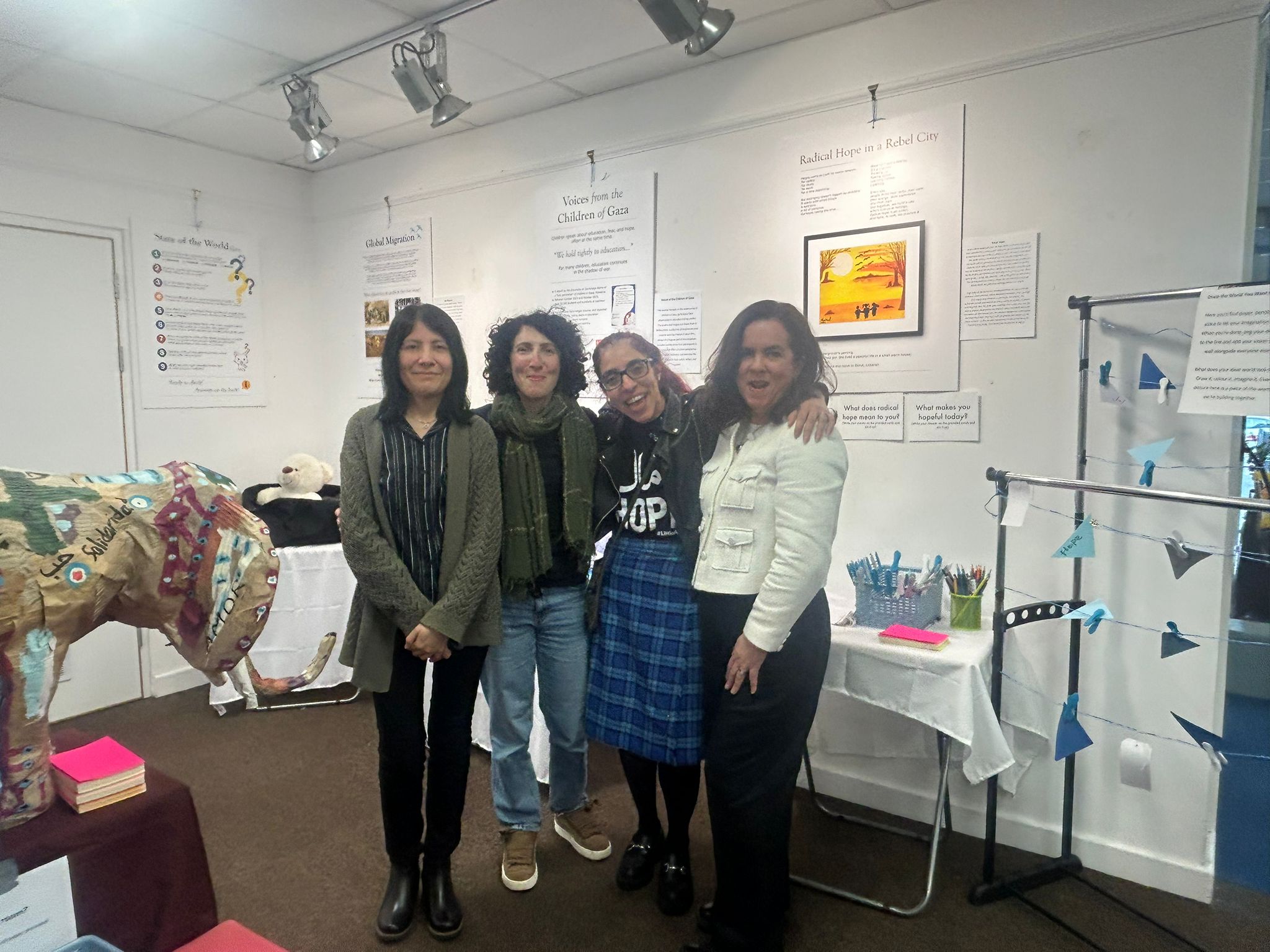
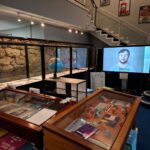
Visitors could watch films, explore books and resources, follow a global justice timeline, take the State of the World Quiz, encounter installations and respond to questions themselves.
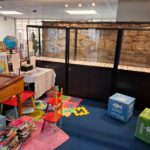
There was also a dedicated children’s area, where younger visitors were invited to think about fairness and imagine the kind of world in which they would like to live.
From the outset, the intention was that this would be an exhibition to participate in, rather than simply look at.
And that is what began to happen.
5. Public Engagement: Listening and Responding
An important principle underpinning In a Fractured World was that public engagement should not mean simply presenting information to an audience.
Visitors were invited to respond.
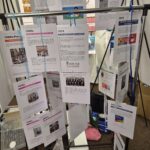
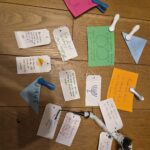
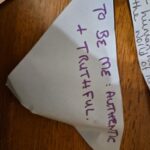
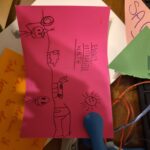
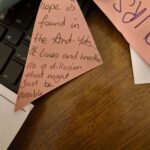
Across the exhibition, handwritten notes, drawings and messages gradually accumulated. In doing so, visitors became contributors to the exhibition rather than simply its spectators.
Responding to the Children of Palestine
One particularly powerful site of engagement developed around the installation featuring poetry and voices from children in Palestine.
PHOTO: Poster ‘Voices from the Children of Gaza’
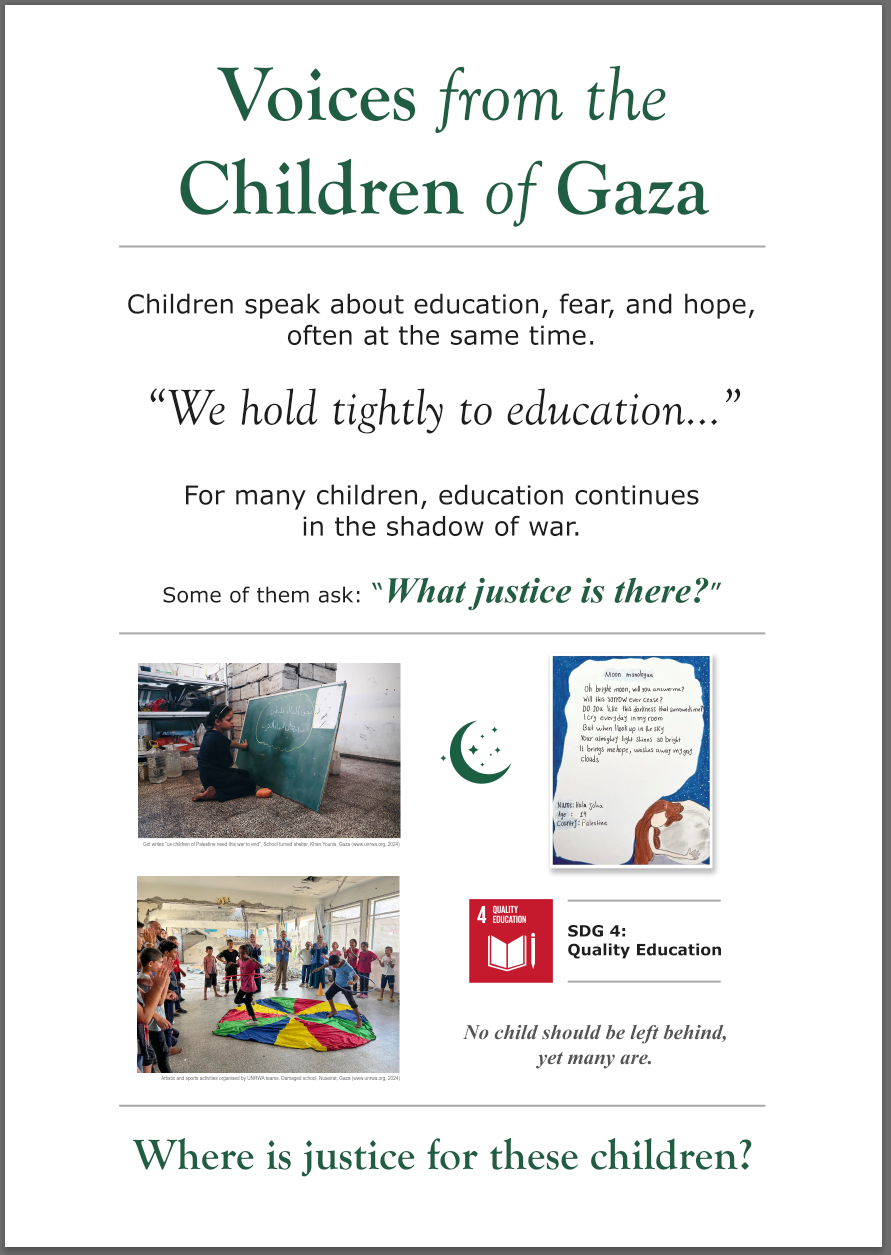
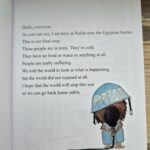
Visitors were invited not simply to read the children’s words, but to respond to them. The resulting pages became a growing conversation across geographical distance.
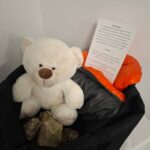
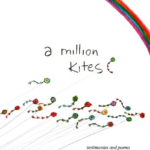
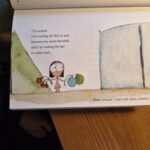
The station included both a poster and artefacts relating to the right to education. It also included several poems from the book A Million Kites: Testimonies and Poems from the Children of Gaza
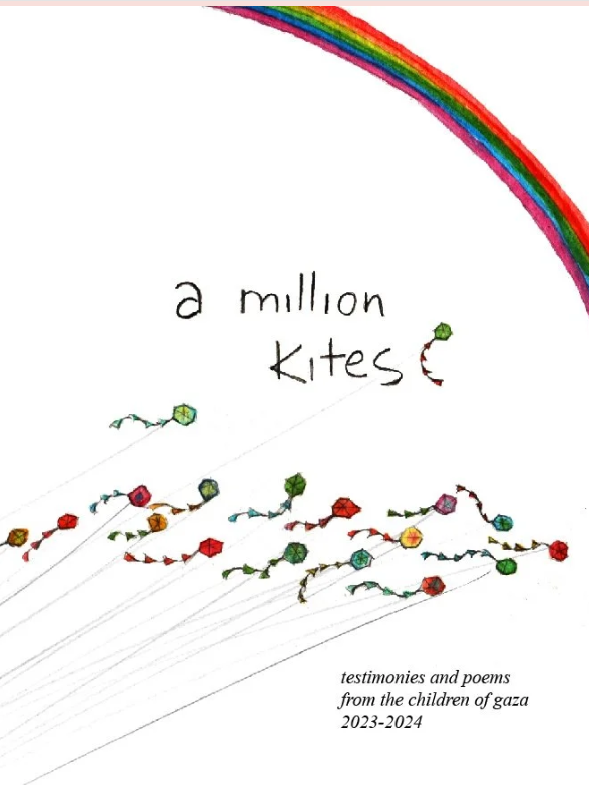
Some responses expressed love and solidarity:
“We don’t know you but we love you.”
“You are seen + loved.”
Others conveyed grief and a profound sense of moral responsibility:
“I am so sorry that this world has failed you.”
“Instead of us giving you hope, you end up giving it to us.”
Importantly, some responses moved beyond sympathy towards a stated intention to act:
“I have read your wonderful poetry & I will take political action.”
Another visitor wrote:
“We read your poetry and we will continue to take radical action.”
And another reminded the children that solidarity can take forms that are not always immediately visible:
“There are people taking quiet actions every day in solidarity. Actions outside of the visible marches, in the hearts and minds of so many you will never see…”
These responses illustrate something central to the purpose of Global Justice Education. It is not simply about transmitting information about events happening elsewhere. It can create spaces in which people encounter other lives and perspectives, reflect on their own relationship to injustice and consider what solidarity and action might mean in practice.
The installation itself therefore changed as people encountered it. The children’s words generated new words around them, creating a dialogue that the exhibition team could not have scripted in advance.
Photo (Permission received): Names
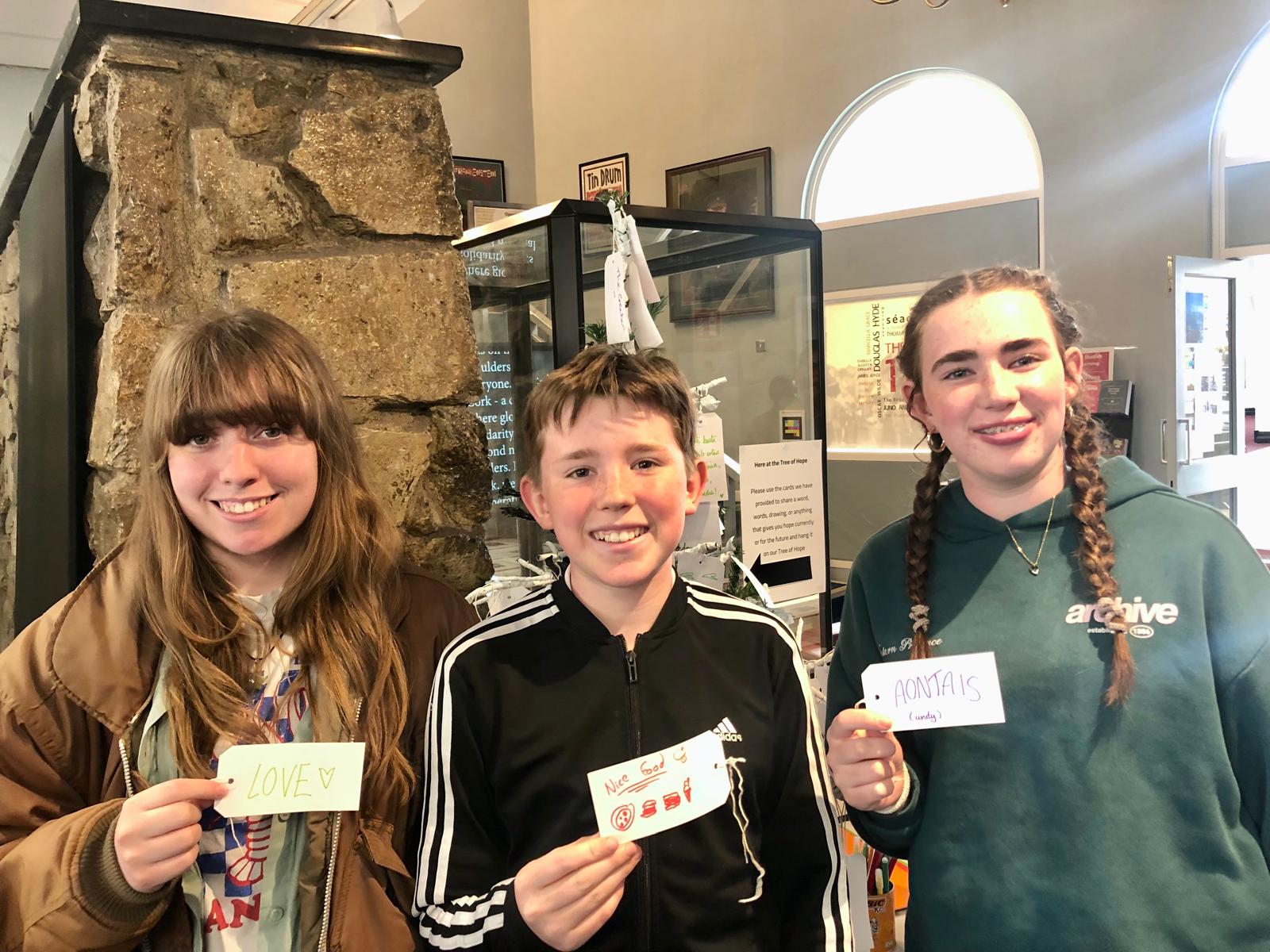
Growing a Tree of Hope
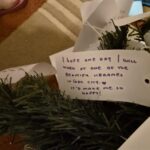
Elsewhere in the exhibition stood the Tree of Hope.
The invitation beside it was deliberately open:
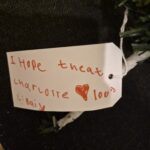
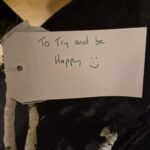
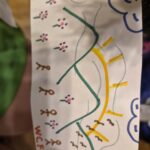
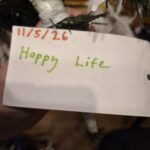
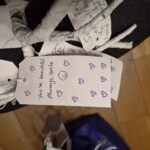
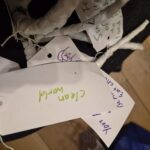
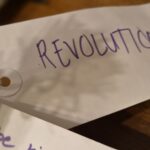
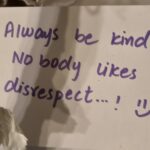
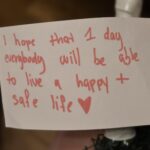
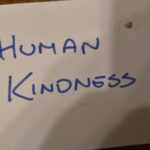
“Please use the cards we have provided to share a word, words, drawing, or anything that gives you hope currently or for the future and hang it on our Tree of Hope.”
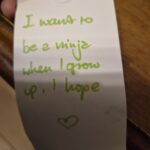
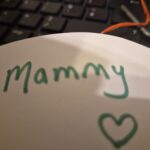
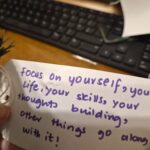
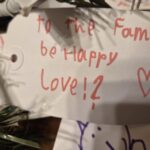
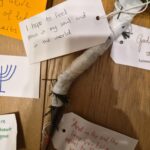
Over the course of the exhibition, the branches filled with handwritten tags, drawings, messages and contributions in different languages.
[PHOTO: Tree of Hope filled with contributions]
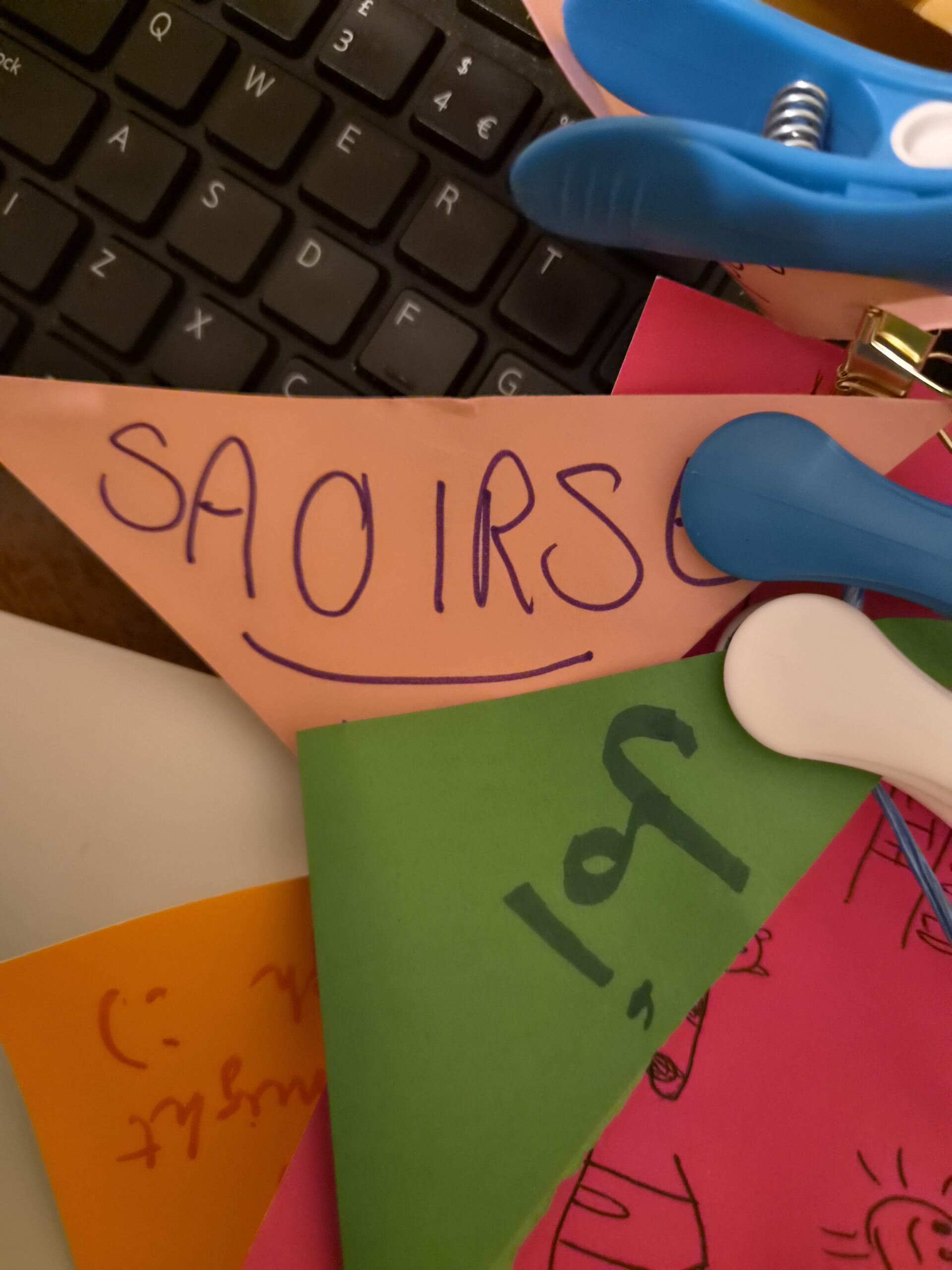
The responses were extraordinarily varied.
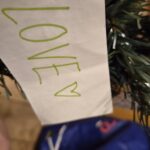
Some located hope in the intimate and everyday: “Mammy”, friendship, family, health, love, breathing, nature and simply beginning again.
One visitor wrote:
“Love yourself and love each other.”
Another offered the quiet reminder:
“Every day is a new one.”

For some, hope was spiritual. Others found it in meditation, relationships, self-belief, education or the possibility of achieving something important in their own lives.
There was also grief. One particularly moving contribution remembered a loved one who had died:
“Please pray for my Darling Kelly who passed away this year RIP. She brought Hope to anyone who had the privilege of loving her.”
Here, hope did not mean pretending that everything was fine. It existed alongside loss, memory and love.
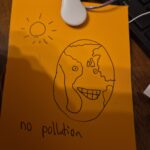
Other contributions moved explicitly towards collective and global concerns. Visitors wrote about peace, racism, climate change, poverty, borders, animals and the future of the planet.
One tag imagined:
“No poverty / No borders just humans / Flora + fauna co-existing in harmony for the good of our planet.”
Another expressed a hope for:
“Peace in my soul and in the world.”
An Irish-language contribution captured the collective dimension especially well:
“Ní neart go cur le chéile.”
– there is no strength without unity.
Another participant described radical hope as:
“Really reflecting on an issue and taking some action to keep hope alive.”
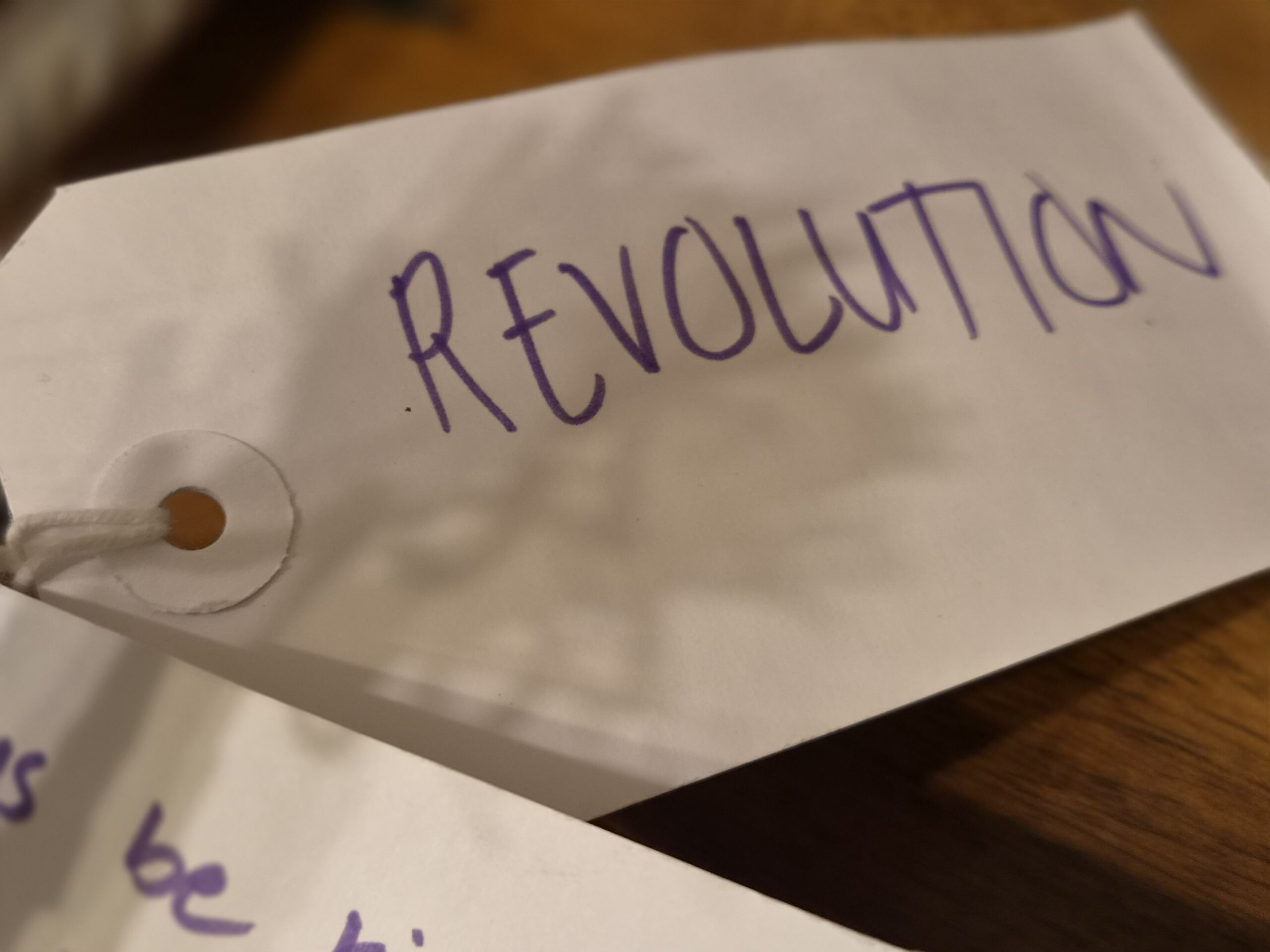
There was humour and playfulness too: dreams of meeting Katy Perry, becoming the “king of the pirates”, children’s drawings, hearts, rabbits and hopes for Candy Land sat alongside serious statements about justice and peace.
This diversity mattered.
The Tree did not produce one official definition of hope. Instead, it revealed many different hopes – personal and political, intimate and global, serious and playful, rooted in love, grief, spirituality, relationships, justice and collective action.
And the physical Tree itself changed as the exhibition continued. What began as an object created by the project gradually became a collective public artefact.
People encountered what previous visitors had written before adding something of their own.
The public had become part of the exhibition.
6. Why a Public Library?
Cork City Library was not simply a convenient venue. It was integral to the idea.
Libraries are democratic public spaces. People enter them for many reasons and with very different experiences, ages and levels of education. There is no requirement to enrol on a course before encountering an unfamiliar idea.
For a project concerned with Global Justice Education, that matters.
Taking the exhibition into the library enabled learning developed within a university to enter a civic space – but the public responses also allowed knowledge, experience, emotion and questioning to travel in the opposite direction.
It also strengthened collaboration between UCC, Cork City Library and Cork Community Media Hub, bringing together academic learning, professional creative practice and a civic institution around a shared commitment to public education.
7. Bringing the Exhibition Back to UCC
After its month in Cork City Library, the complete exhibition returned to UCC.
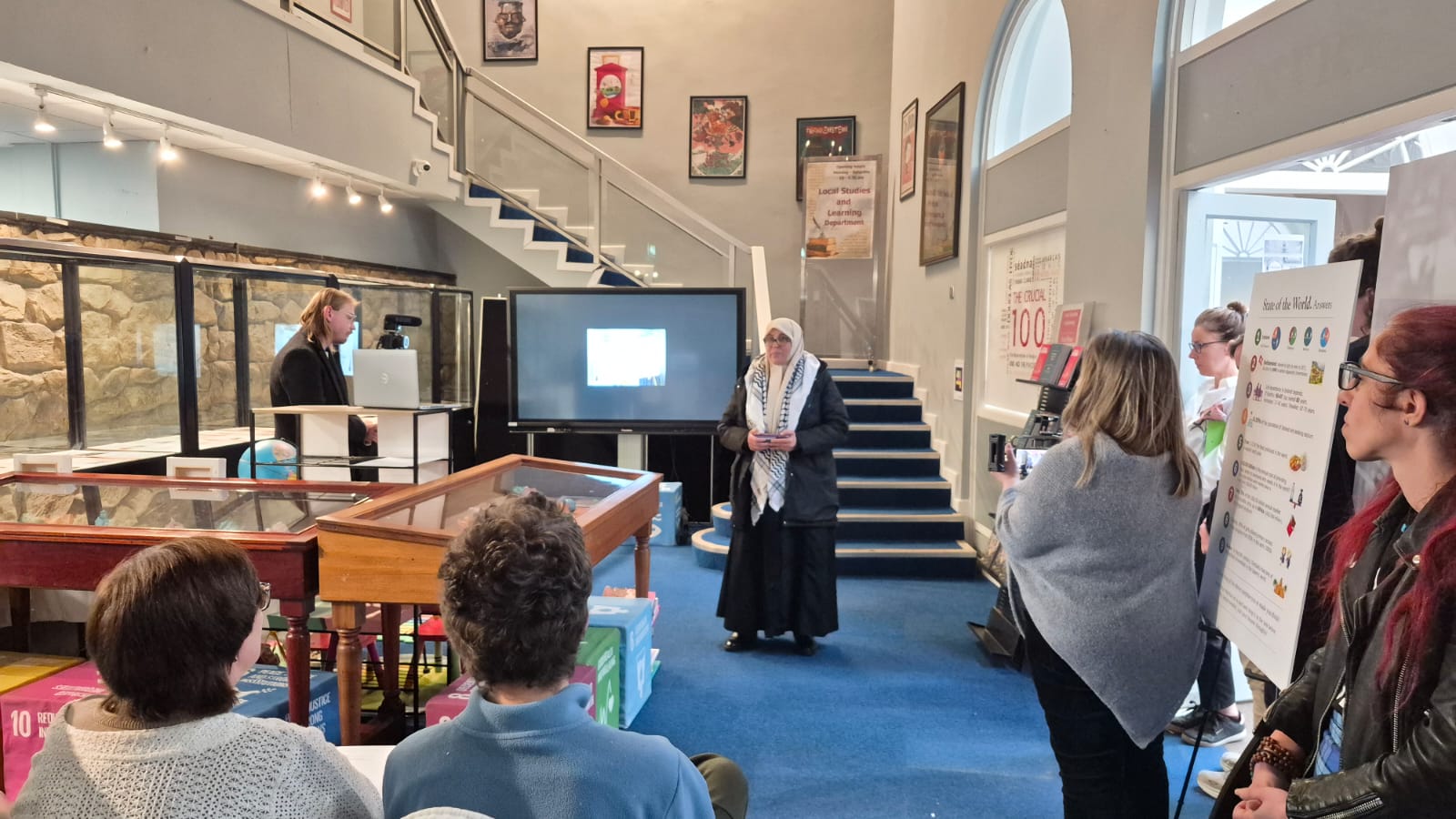
It was launched on campus on 8 June 2026 as part of Praxis Week 2026 and remained open throughout the week to staff, students and members of the public.
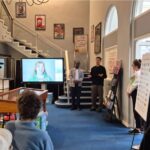
PHOTO: Exhibition at UCC/ Speaker Lassane Ouedraogo)
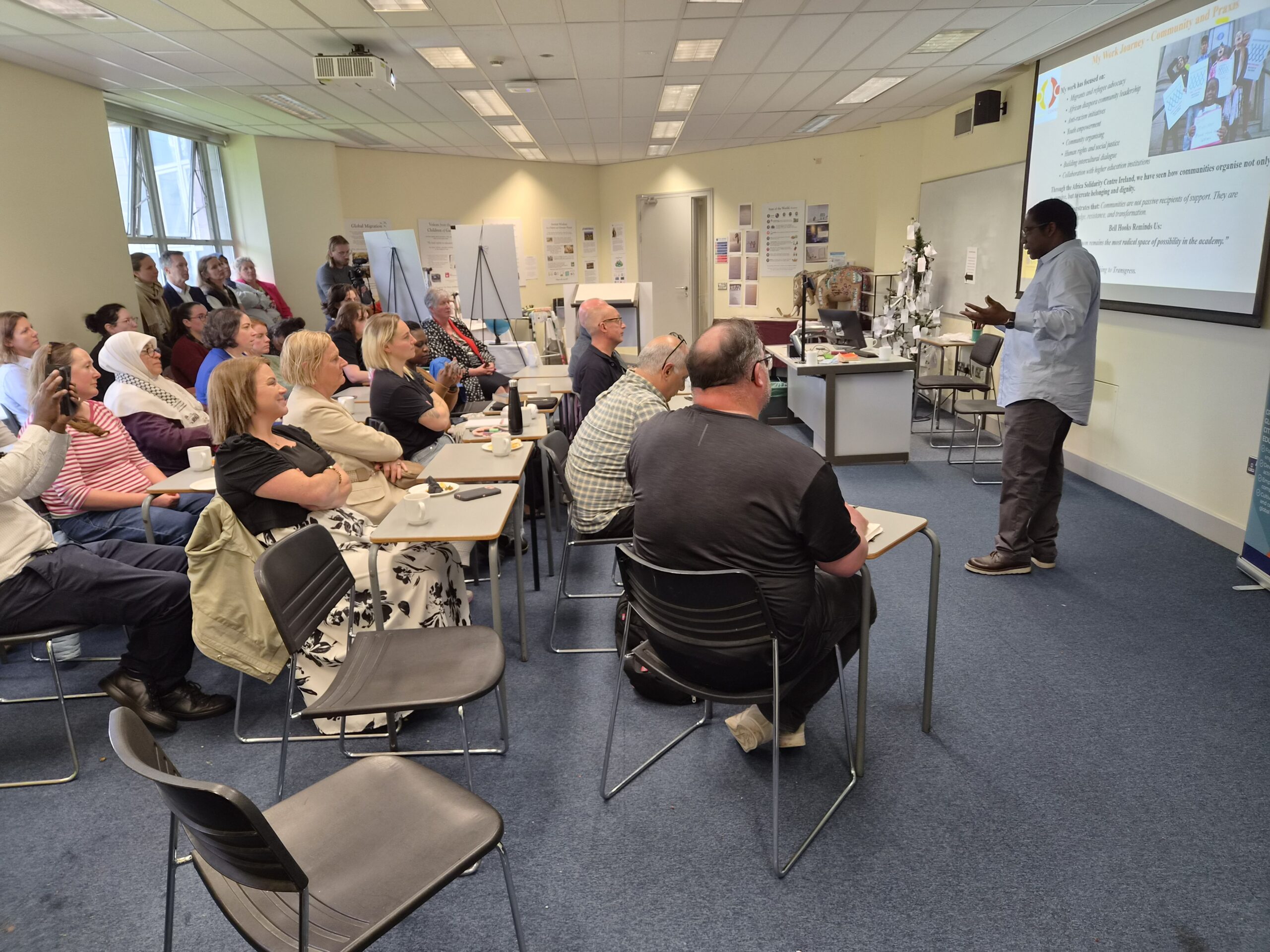
This second life for the exhibition was significant.
Work that had originated with UCC staff learners had travelled into a civic space, been encountered and added to by members of the public, and now returned to the university carrying those encounters with it.
In that sense, the movement of the exhibition reflected something important about the Praxis approach itself:
Knowledge should not simply travel in one direction from university to community.
Academic knowledge, professional expertise, creative practice and lived experience can meet – and change one another.
8. What Did Participants Learn?
The exhibition was a public project, but it was also a substantial educational experiment.
Participants’ reflective work shows learning that extended well beyond acquiring knowledge about particular global issues.
They wrote about becoming more confident in asking difficult questions, listening across difference and working collaboratively. They reflected on ethical judgement, cultural representation, accessibility and the responsibility involved in telling another person’s story.
They also encountered genuine tensions.
How do we make an enormously complex issue understandable without making it simplistic?
How do we raise awareness without leaving people feeling powerless?
How can we communicate injustice while also making room for agency and hope?
How do we work collaboratively when people have different ideas, skills and ways of approaching a problem?
These are not problems that Global Justice Education necessarily needs to resolve neatly. Learning how to remain with complexity, question our own assumptions and work responsibly with others is itself part of the process.
Crucially, participants also identified ways of bringing this learning back into their own teaching, research and professional practice at UCC.
This gives the project a reach well beyond the people who participated directly. Supporting university staff to engage deeply with Global Justice Education creates the possibility for that learning to travel into other classrooms, disciplines, professional spaces and future projects.
9. What Happens Next?
One of our aims was to ensure that In a Fractured World did not disappear when the exhibition came down.
The physical exhibition has already demonstrated that it can travel: from a city library to a university and potentially into other educational and community settings.
The films, photographs and learning resources are being brought together into a digital collection. The considerable body of public responses generated by the exhibition is also being documented and analysed.
The experience of creating and installing the exhibition in two very different settings is informing the development of a short practical guide that can help other libraries and educational settings adapt the model.
In this way, what began as an intensive learning process for a relatively small group of UCC staff can have a much longer life.
10. A Model for Global Justice Education
Perhaps the greatest success of In a Fractured World was not any individual film, poster or installation.
It was what happened when the different parts were brought together.
Critical learning led to creative practice. Creative practice required collaboration. Collaboration raised questions about voice and power. Those questions influenced how stories were told. The stories moved into a public space. Members of the public encountered them, questioned them and added their own voices. And the learning travelled back into the university.
That is a very different model of education from simply transferring information from an expert to a learner.
It is participatory, creative, interdisciplinary, reflective and public.
At a time when questions of war, forced displacement, environmental crisis, inequality and social fragmentation can feel overwhelming, education also needs spaces in which people can encounter those realities without being paralysed by them.
The final words of the exhibition title were therefore important:
Worlds We Imagine
Global Justice Education asks us to understand the world as it is.
But it also asks something more difficult of us: to question what we have come to regard as inevitable, to listen seriously to other ways of knowing and living, and to retain the capacity to imagine that things might be otherwise.
For one month in Cork City Library, and again during Praxis Week at UCC, In a Fractured World created a public space in which people could begin to do exactly that.
In a Fractured World was led by Dr Gertrude Cotter, University College Cork, in collaboration with Cork City Library and Cork Community Media Hub. The exhibition project was funded by Taighde Éireann – Research Ireland through the New Foundations programme. It was developed within the wider work of UCC’s Praxis Project in Global Citizenship and Development Education, funded by Irish Aid. We gratefully acknowledge the support of our funders, partners, participating UCC staff, Palestinian colleagues, contributors and the many members of the public who engaged with the exhibition and added their voices to it.
12. Credits and Acknowledgements
Project lead and academic coordination
Dr Gertrude Cotter, School of Education, University College Cork – project conception and leadership; Global Justice Education programme design and teaching; coordination of the exhibition, films and public-engagement project.
Exhibition design
René Gonzales – exhibition design and visual presentation.
Film-making training and production support
Cork Community Media Hub – professional training and support in visual storytelling, filming, sound, editing and ethical film-making.
Films
The Care Economy
Created by: [names]
With contributions from: [names, if you want the people interviewed acknowledged]
Film-making support: Cork Community Media Hub.
Global Migration
Created by: [names]
Film-making support: Cork Community Media Hub.
Voices Sounding the Alarm: Children and Their Supportive Ecosystems – Voices on the Violation of Their Right to Education
Created by: [names]
With Palestinian contributors: [names, where appropriate and consented]
Film-making support: Cork Community Media Hub.
This is the approximately five-minute film centred on Palestinian children’s experiences of education, fear, resilience and hope.
[Fourth film title]
Created by: [names]
Film-making support: Cork Community Media Hub.
Exhibition posters, installations and interactive work
The Care Economy – [name/s]
Ancient Wisdom for a Fairer and Greener Planet – [name/s]
Global Migration – [name/s]
Voices from the Children of Gaza – [name/s]
Radical Hope in a Rebel City – [name/s]
Global Justice and Development Education Timeline – [name/s]
State of the World Quiz – [name/s]
Meitheal / Confucius / Ubuntu / Ujamaa / Undugu / We Share a Single Planet poster series – [name/s]
Tree of Hope and public-response installation – [name/s]
Children’s activities and participatory materials – [name/s]
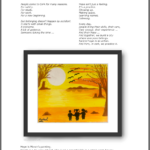
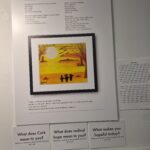
Hope artwork – Marah Barghouth. The exhibition inventory specifically identifies her painting Hope.
Exhibition and film contributors
Gertrude Cotter, Carla Almanza-Galvez, Marica Cassarino, René Gonzales, Billy Goodwin, Joanne Heffernan, Laoise Keevers, Bahriye Kemal, Mary McNicholas, Heather Morgan, Orla Murphy, Kareema Naser, David Nyaluke, Clodagh O’Sullivan, Dua Wahbeh and Yuhao Yang.
Partners and support
Our sincere thanks to Cork City Library for partnering in the project, hosting In a Fractured World for a month, supporting its public launch and providing an open civic space in which members of the public could encounter and contribute to the work.
Thanks to Cork Community Media Hub for its partnership and professional film-making training and production support.
Thanks to University College Cork, including the School of Education and the Praxis Project, for supporting the staff-learning, research and public-engagement work through which the exhibition was developed.
The project was supported by Taighde Éireann – Research Ireland through the New Foundations programme. The wider Praxis Project at UCC is funded by Irish Aid.
We also warmly acknowledge all of the people who contributed their voices and experiences to the films, the Palestinian children and colleagues whose work formed part of the exhibition, and the many members of the public who added responses, drawings, messages and hopes during the Cork City Library and UCC exhibitions.
13. Images