Contents (go to): Introduction ¦ Module 1 ¦ Module 2 ¦ Module 3 ¦ Module 4 ¦ Module 5 ¦ Module 6 ¦ Module 7 ¦ Module 8 ¦ Module 9 ¦ Module 10 ¦ Module 11 ¦ Module 12 ¦ References

An educational resource for university medical educators
Author: Dr Rene Gonzales & Dr Gertrude Cotter
Principal investigator: Dr Gertrude Cotter
The Praxis Project, School of Education, UCC, September 2024

 Full resource: “Global Citizenship Development Education meets Ophthalmology” is available at
<http://praxisucc.ie/wp-content/uploads/2024/10/Oph-GCDE_v7_colours_oct2024.pdf>
(Opens in a new tab or window. To download, right-click and “Save link as”: PDF = 9MB.
If you see the message “This file can’t be downloaded securely”, please hover over the message to the ellipses “…” and select “keep”, and “Keep anyway“).
Introduction
This resource offers a comprehensive approach to Global Ophthalmology Education framed through social justice and human rights lenses. It focuses on the integration of Global Citizenship Development Education (GCDE) into the field of Ophthalmology, and it serves as a guide and a toolkit for university medical educators who are interested in incorporating global citizenship principles into their teaching. The content aims to empower educators, researchers, and practitioners to explore the root causes of eye health inequalities, understand the social determinants of health, and engage in equitable practices.
The document is structured into twelve modules, each offering a distinct focus that collectively contributes to a well-rounded, globally informed ophthalmology curriculum. These sections provide a combination of theoretical insights, practical activities, case studies, and methodological approaches to help educators effectively integrate GCDE into their teaching.
At the end of the document, a set of Appendices present extended details and examples that clarify the concepts explained in the text. They are numbered according to the modules they illustrate.
The following sections highlight critical points, practical activities, and strategies to integrate social justice into eye health education and research. This is a snapshot of the full resource that contains further details.
Module components and resources
- Module 1. Introduction to GCDE and Ophthalmology: Offers definitions of GCDE and Ophthalmology and how they integrate. A review on the state of the world from the WHO and UN points of view, and a review on teaching methods.
- Module 2. Global health and ophthalmology: Exploring the global burden of eye diseases and the role of ophthalmologists in addressing them.
- Module 3. Ethical considerations in global ophthalmology: Navigating ethical dilemmas specific to ophthalmology in a global context.
- Module 4. Social determinants of eye health through the GCDE lens: Understanding how socioeconomic factors affect eye health and strategies to mitigate these effects.
- Module 5. The wider socio-economic and political contexts of eye health: A view on food security and corporate practices that affect eye health.
- Module 6. Skills for global ophthalmology through the GCDE lens: Building key skills for cultural competency and their relevance at various stages of the specialist’s career.
- Module 7. Community engagement and international partnership in eye health: Techniques for effective community involvement and to build up international partnerships.
- Module 8. Sustainable practices in ophthalmology: An analysis and exploration of sustainable, and environmentally conscious practices in eye care.
- Module 9. Advocacy and policy in ophthalmology within the framework of GCDE: Analysing policies impacting eye health and strategies for effective advocacy.
- Module 10. Research for global eye health through a GCDE lens: Developing research methodologies tailored to global ophthalmology.
- Module 11. Assessment and feedback through a GCDE lens: Exploring methods of learner assessment and feedback in education.
- Module 12. Empowering global eye health through GCDE: Closes the resource with a recapitulation of core principles, reflection, challenges and call to action.
Each section of this resource is designed to be adaptable, allowing educators to tailor the content to their specific teaching contexts and the needs of their students
Module 1. Introduction to GCDE and Ophthalmology
The integration of principles of GCDE into ophthalmology education provides future ophthalmologists with the tools and perspectives needed to address global challenges. This approach aims to prepare healthcare professionals who are not only skilled in clinical practice but also committed to advocating for and contributing to global health equity in their work.
The module provides definitions of GCDE and Ophthalmology, and an analysis of how they integrate. In an overview of the state of the world’s global eye health, this section presents a brief history of how eye health inequalities were addressed from a global perspective.
Of major importance globally is the World Health Organisation (WHO), which periodically sets goals to improve the coverage of health care. Another global institution is the United Nations, which in agreement with its member states has produced a set of goals to enhance quality of life for everyone. One of their latest commitments are the Sustainable Development Goals (SDGs), summarised as a reference, with some discussion on those most relevant to eye health and education.
Finally, the introduction touches on suggested teaching methodologies and techniques to instruct an assess that have shown to be most effective in learning GCDE. After setting learning objectives there is a summary of the components of the resource.
Module 2. Global health and ophthalmology
Global eye health.
“Eye health is the state in which vision, ocular health, and functional ability is maximised, thereby contributing to overall health and well-being, social inclusion, and quality of life for everyone, everywhere” (Burton et al., 2021; Ramke et al., 2021).
Key indicators of visual impairment.
- 2.2 billion people live with visual impairment globally.
- 1 billion cases could be prevented or are yet to be addressed.
- Women and individuals in middle- and low-income countries are disproportionally affected.
The World Report on Vision published by the World Health Organisation In 2019 is an excellent reference document to prepare teaching material for lay and health-care learners.
 The World Report on Vision is available at: <https://www.who.int/publications/i/item/9789241516570> (Opens in a new tab or window).
A summary of the World Report on Vision on an infographic is available at
<https://cdn.who.int/media/docs/default-source/infographics-pdf/world-vision-infographic-final.pdf> (Right-click > “Save as”).
Estimates for 2050 predict that 61 million will be blind, 474 million will have moderate to severe vision impairment, 360 million will have mild vision impairment and 866 million will have presbyopia (blurred vision at close distance) (Bourne et al., 2020).
Causes of visual impairment
Eye health is influenced by a variety of conditions, some of which are prevalent globally and contribute significantly to visual impairment.
Causes of visual impairment
 Refractive Errors
Myopia and Presbyopia, are among the most common causes of visual impairment. Myopia is on the rise globally, with projections indicating that by 2050, 66.4% of the population in Asia may be affected.
 Cataract
More frequent in older adults, this is a cloudiness in the lens of the eye that leads to progressive blurred vision and blindness.
 Age-related Macular Degeneration (AMD)
AMD is another major cause of visual impairment, particularly in older adults. The global prevalence of AMD is expected to increase, with the highest rates in Asia and Europe.
 Glaucoma
Commonly resulting from an increase of pressure inside the eye, it affects millions globally, with a significant number of cases in Asia and Africa. It is more prevalent among people of African descent and those living in urban areas.
 Diabetic retinopathy
Long standing diabetes damages the retina’s blood vessels making them leaky or blocked, causing swelling of the retina and visual deterioration. These abnormal blood vessels may bleed or cause scarring and blindness.
 Trachoma
This is a bacterial infection that causes scarring of the eyelids and cornea, it is the leading cause of child-blindness in regions with poor sanitation. Global efforts have reduced its prevalence but has not been fully eradicated.
 Retinopathy of Prematurity (ROP)
ROP results from exposure to oxygen at an early age, disrupting the normal development of the retina and loss of vision. A consequence of improved neonatal healthcare that allows survival of extremely premature infants.
 Retinoblastoma
This is a life-threatening tumour that develops inside the eyes of newborns and young children. Diagnosis and treatment may be delayed in areas without specialists, undermining the WHO’s efforts to improve childhood cancer survival.
Other common eye health conditions do not commonly lead to visual impairment but may affect the quality of life to various degrees, particularly if left untreated.
Eye conditions without visual impairment
 Blepharitis
Inflammation of the eyelids near the base of the eyelashes causing redness and irritation of the eye and eyelids.
 Chalazion and hordeolum (stye)
Eyelid disorders resulting from a blocked gland or localized infection that causes inflammation, swelling and pain.
 Conjunctivitis
Inflammation of the clear membrane lining the inside of the eyelids and covers the white part of the eye (conjunctiva), mostly caused by allergy or infection.
 Dry eye
Inadequate production of tears that results in irritation, grittiness in the eye and blurred vision.
 Pterygium and pinguecula
Abnormal growths on the conjunctiva that can cause pain. Only in advanced cases, pterygium can extend further into the cornea and cause obstruction of vision.
 Subconjunctival haemorrhage
Broken blood vessels underneath the conjunctiva. Mostly due to trauma.
Access to eye care and social justice
Access to eye care is not merely a medical issue but a matter of social justice. The disparities in eye health, particularly in underserved communities, are often rooted in broader social inequalities.
Global management of eye conditions
The World Health Organisation (WHO) recognised in 2021 that the largest causes of visual impairment that could be treated with the most cost-effective method were Refractive Errors and Cataract. It is estimated that approximately 800 million people globally had a refractive error causing visual impairment that could be corrected with prescription glasses.
The resource includes a description of global efforts to manage eye conditions and presents some memorable case studies showing management of eye health conditions from around the globe.
Among those efforts is “The Lancet global health commission on Global Eye Health”, published in 2021 and presented at the World Health Summit of that year by its main author Prof. Matthew Burton. Prof Burton discusses the findings in a video that followed the summit.
Video
Video: D 06 – Eye Health: An Underestimated Global Health Challenge
Publisher / date: World Health Summit, 2021.
Length: 1hr, 30min.
Description: The session presents new findings of the WHO World Report on Vision and the Lancet Global Health Commission on Global Eye Health. On this basis different international stakeholders from academia, politics, civil society, and industry. The expert panel discusses how this global challenge can be addressed not only within the health sector, and beyond.
Link: <https://www.youtube.com/watch?v=2hqJxfEaM-s> (Opens in a new tab or window).
Interactive maps and visual aids
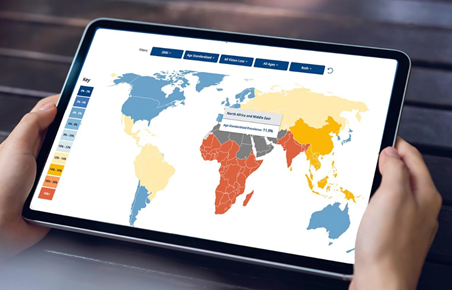 International Agency for the Prevention of Blindness (IAPB)
Publisher / date: IAPB, 2020.
Description: 1.1 billion people experience vision loss primarily because they do not have access to eye care services1. Over 90% of those with vision loss live in low- and middle-income countries. 74% of people with vision loss are over 50 years old. 55% of people with vision loss are women
Link: <https://www.iapb.org/news/updated-vision-atlas-shows-1-1-billion-people-have-vision-loss/> (Opens in a new tab or window).
Other resources
Eye health is a concern for everyone and interests in discussing or enquiring about conditions related to the eyes vary depending on age groups and specific topics. Discussion forums offer an opportunity to seek guidance and to learn more about eye health amongst people in the community. Some forums are open only to the public while others are monitored by health care teams that clarify concerns and give advice that may benefit everyone.
The “Patient” website is an online information hub that provides articles and forums on health care for the community and health care providers on several areas of health. Content is monitored by health professionals for accuracy and keeps standards following those of the National Health Service (NHS) in the UK. Available at <https://patient.info/> (Opens in a new tab or window).
The following examples of forums relate to eye health:
Eye problems: Generic eye problems, mostly related to vision difficulties of unknown cause. Available at <https://patient.info/forums/discuss/browse/eye-problems-3343> (Opens in a new tab or window).
Cataract: Specific topic on cataracts, mostly by those that underwent surgery. Available at <https://patient.info/forums/discuss/browse/cataract-386> (Opens in a new tab or window).
Module 3. Ethical considerations in Global Ophthalmology
This module covers the definition of ethics and presents key ethical principles with case studies that exemplify the application of ethics and equity.
Ensuring that all patients have access to quality eye care and that their rights are upheld in all healthcare interactions.
Commitment to Social Justice
Addressing the root causes of eye health disparities, including poverty, lack of access to healthcare, and social inequalities.
Sustainability
Promoting practices that build local capacity and support the long-term improvement of eye health systems, rather than relying on short-term interventions.
Cultural sensitivity
Understanding and respecting the cultural context in which ophthalmologists work, ensuring the care is culturally appropriate, and that local traditions and practices are respected.
Ethical engagement in Global Ophthalmology revises the skills required for the creation of partnerships and presents a critical perspective of volunteerism in Ophthalmology with a focus on volunteering trips conducted during formation years of the specialty.
Ethical considerations in Global Ophthalmology
|
|
Best practices in Global Ophthalmology revises desirable elements that need to be considered during practice.
The module looks at classroom methodologies to teach ethics using case studies, simulation and interactivity, followed by notes on assessment and feedback.
Module 4. Social determinants of eye health through a GCDE lens
Health does not exist in a vacuum; it is intricately linked to the social and economic environments in which people live.
“Poorer people live shorter lives and are more often ill than the rich”.
This module looks at the various social determinants that significantly impact eye health, focusing on how poverty, education, access to healthcare, and nutrition are interlinked with visual impairment and overall health outcomes.
“9.2% of the world’s population lives in extreme poverty” (World Bank 2023).
The section on Malnutrition explores shortage and excess of food and how they relate to eye health and potentially to visual impairment.
The fibre contained in food is not a nutrient; it is mostly undigestible carbohydrates known as roughage, e.g., cellulose in plant foods and bran in cereals. Fibre is beneficial to digestion because it holds water inside the intestines and may act as a laxative (Davidson, 1999).
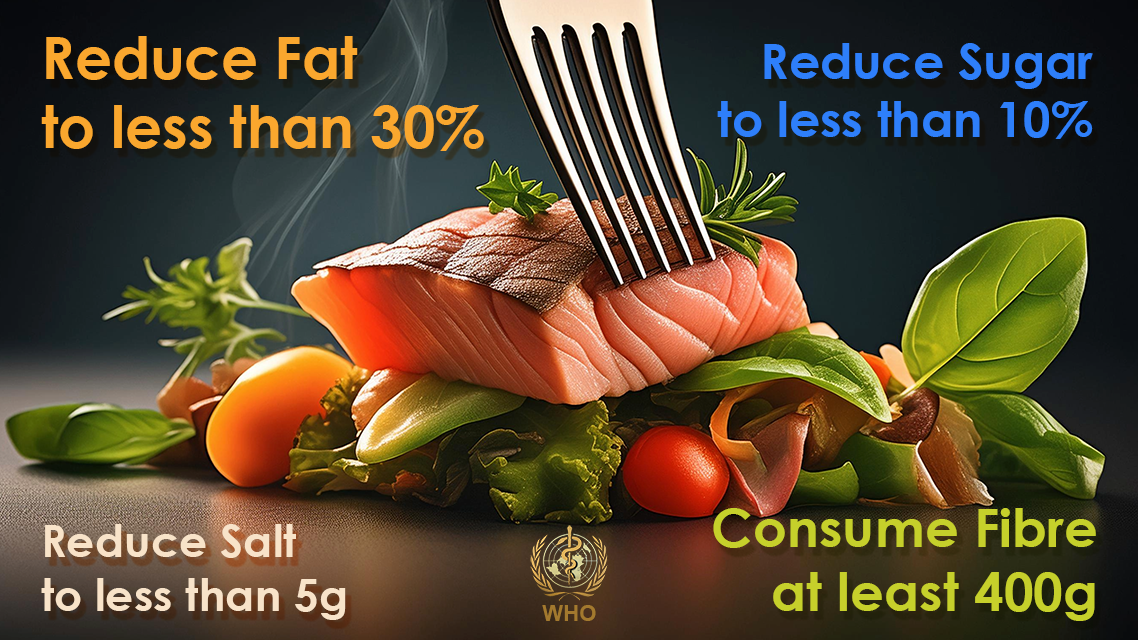
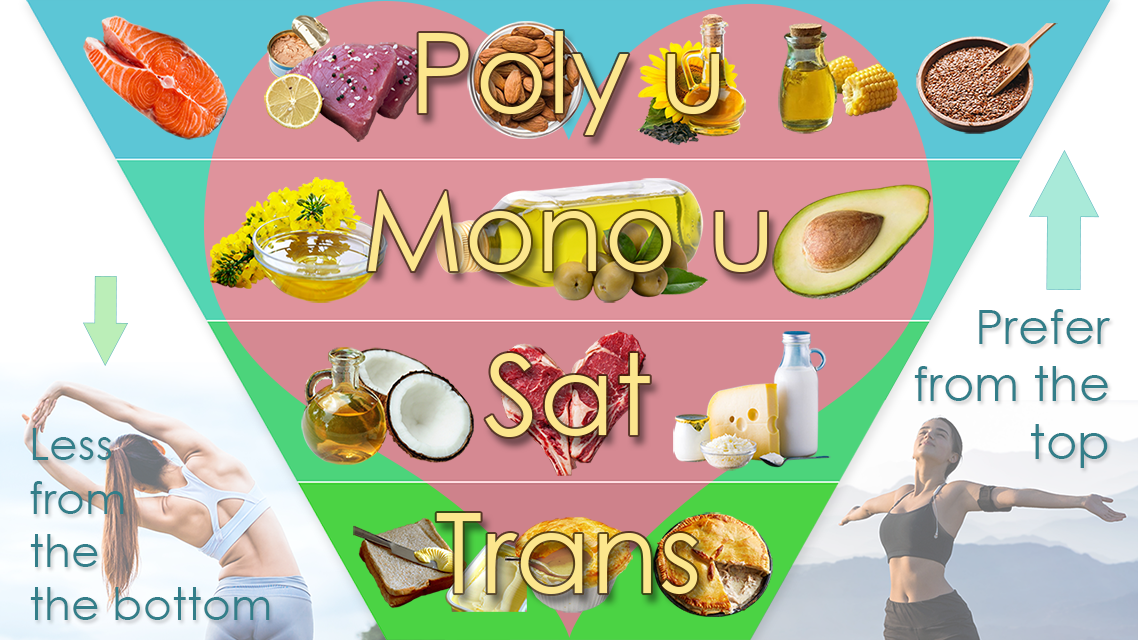
Recommendations on food constitution and intake are presented in addition to a revision on types of alimentary fat, following recommendations by the WHO:
Salt: Keep salt consumption to less than 5 g per day by not having salt on the table, not adding salt, soy sauce or fish sauce when preparing food, limit salty snacks and hidden salt in ready-made meals, bacon, ham, salami, and cheese.
Dietary fibre: Consume at least 400 g a day of fibre-rich food (whole-grain cereals, legumes, fruit, and vegetables). These can be divided into 5 portions a day included with your meals and as snacks.
Sugar: Consume less than 10% of daily energy intake by limiting sugary foods or drinks (candies and sweet snacks, sugar-sweetened beverages), replace them with fresh fruit, raw vegetables as snacks and non-sugary sweetened or unsweetened beverages (Marmot & Wilkinson, 2011; WHO, 2019).
Theoretical frameworks
In the context of GCDE, theoretical frameworks offer a foundation for exploring the root causes of social and health inequities. By applying these frameworks, educators and students can critically examine the power dynamics, cultural contexts, and systemic structures that contribute to disparities in areas such as eye health.
The frameworks revised in the resource include Freirean pedagogy; Transformative education; Post-colonial theory; Eco-feminism; Social justice; Anti-racism, and Human rights.
Media for Human Rights
 The United Nations Declaration of Human Rights (30 articles) is available at:
<https://www.un.org/en/about-us/universal-declaration-of-human-rights> (Opens in a new tab or window).
A language selector to listen or read the full declaration in any of 89 languages is available at: <https://udhr.audio/> (Opens in a new tab or window).
The English version was read by Mrs Eleanor Roosevelt (USA President Franklin D. Roosevelt’s wife), who presented the original proclamation at the United Nations (UN) General Assembly, 3rd Session 180th and 181st Plenary Meeting, in 1948.
Module 5. The wider socio-economic and political contexts of eye health
Eye health, like all aspects of health care, operates within a broader global context influenced by trade policies, food subsidies, and corporate practices. These factors shape the availability, affordability, and quality of food, contributing to malnutrition and, consequently, affecting eye health.
This resource briefly reviews global trade policies, food subsidies and corporate practices relating to the food industry. This is illustrated by a case study of a trade agreement between USA and Mexico.
The module ends with a suggested activity to support learning of this module.
Module 6. Skills for global ophthalmology through the GCDE lens
This module explores the essential skills needed for global ophthalmology, with a focus on how these can be aligned with GCDE values such as equity, social justice, and cultural competence. Educators can use a variety of strategies, case studies, and activities to help students develop these skills.
The resource discusses the six GCDE skills selected as the most relevant to the eye-care profession.
- Cultural competence.
- Advocacy and social justice.
- Ethical global engagement.
- Global ophthalmology clinical competence.
- Public health knowledge.
- Research skills.
The module continues explaining how Ophthalmologist may engage in Global Citizenship at different stages of their careers, including educator’s strategies for developing GCDE skills.
This section culminates on a list of training opportunities in global ophthalmology, presenting the following programmes that can be accessed in Ireland, UK and USA.
 Information on London School of Hygiene and Tropical Medicine (LSHTM) courses: MSc Public Health for Eye Care, Ophthalmic Epidemiology, Global Blindness: Managing eye care services, and short courses on Global Eye Health is available at <https://www.lshtm.ac.uk/study/courses/short-courses/eye-health> (Opens in a new tab or window).
 Information on Centre for Public Health at Queen’s University Belfast (QUB) programmes on doctoral and post-doctoral training in global eye-health research is available at <https://www.qub.ac.uk/research-centres/CentreforPublicHealth/Research/HealthServicesGlobalHealth/EyeandVision/> (Opens in a new tab or window).
 Information on the Centre for Eye Research Ireland (CERI) focused on industrial applications of ophthalmic research on the prevention of blindness is available at <https://www.tudublin.ie/research-innovation/research/discover-our-research/research-centres/centre-for-eye-research-ireland/about/> (Opens in a new tab or window).
 Information on training and outreach at Moran Eye Centre at the University of Utah, USA, focused on providing access to eye-care to the Navajo Nation in southern Utah is available at <https://healthcare.utah.edu/moran/outreach> (Opens in a new tab or window).
Module 7. Community engagement and international partnerships in eye health
This module explores the roles of community engagement and international partnerships in promoting global eye health. The focus is on both the local Irish community context and on international settings in underserved communities, with a particular emphasis on the values of equity, mutual respect, and shared responsibility.
Community engagement is foundational to effective public health strategies, especially in the field of eye health. The Alma-Ata declaration identified primary health care as the key for “health for all” was the predecessor of the SDGs and the goal of Universal Health (WHO, 2024b).
The Alma-Ata declaration at the International Conference on Primary Health Care, Alma-Ata, USSR, (6-12 September. 1978) is available for download (PDF) at <https://cdn.who.int/media/docs/default-source/documents/almaata-declaration-en.pdf> (Opens in a new tab or window).
The resource includes key considerations for community-based ophthalmology, and revises community eye-care services in Ireland. This is followed by a discussion on how needs of the community can be assessed and how education in the community may be conducted.
Examples of community education projects include:
The Bright Eyes campaign launched by the Association of Optometrists Ireland (AOI) in 2013, commented by Opticianonline. Available at <https://www.opticianonline.net/content/news/irish-campaign-targets-follow-ups> (Opens in a new tab or window).
The Eye Heroes project led by London’s Moorfields Eye Hospital between 2013 and 2022:
The importance of Cultural relevant communication is highlighted by a course on Cross-cultural Competence offered by the Royal College of Surgeons in Ireland (RCSI). Details on the course are available at <https://www.rcsi.com/dublin/professional-cpd/cpdss/cross-cultural-competence-and-effective-communication-workshop/course-details> (Opens in a new tab or window).
Global engagement in eye health encompasses a broad spectrum of activities, ranging from individual advocacy and education to involvement in international health initiatives and research. A discussion on international partnership is followed by educator’s strategies for partnership-building activities, that includes further reading for those interested in information on health professionals in the new century and more.
Global partnership case studies offer an overview of community eye-care services in South Asia, Vision guardians in India and Schoolteachers in eye health in China.
This resource is extended by presenting community project toolkits that include: The Community Engagement in Eye Health Assessment Tool (CEEHAT), “infoNTD”, “Patient” by the UK’s National Health Service (NHS) and “Light for the World”.
Appendices for this module include “Skill building in global eye-health for ophthalmologists” and “Partnerships for global eye health“”, which introduces agencies like:
The International Agency for the Prevention of Blindness (IAPB), available at <https://www.iapb.org/> (Opens in a new tab or window).
Sightsavers, available at <https://www.sightsavers.org/> (Opens in a new tab or window).
The Fred Hollows Foundation, available at <https://www.hollows.org/uk/home> (Opens in a new tab or window).
Light for the World, available at <https://www.light-for-the-world.org/> (Opens in a new tab or window).
The Christian Blind Mission (CBM). Their Eye Health Report is available at <https://cbm-global.org/> (Opens in a new tab or window).
Module 8. Sustainable practices in Ophthalmology
This module explores the relationships between eye health care and the 17 Sustainable Development Goals (SDGs)
A short review of the Lancet Global Health Commission on Global Eye Health from 2021 demonstrates the relevance of the SDGs in eye care.
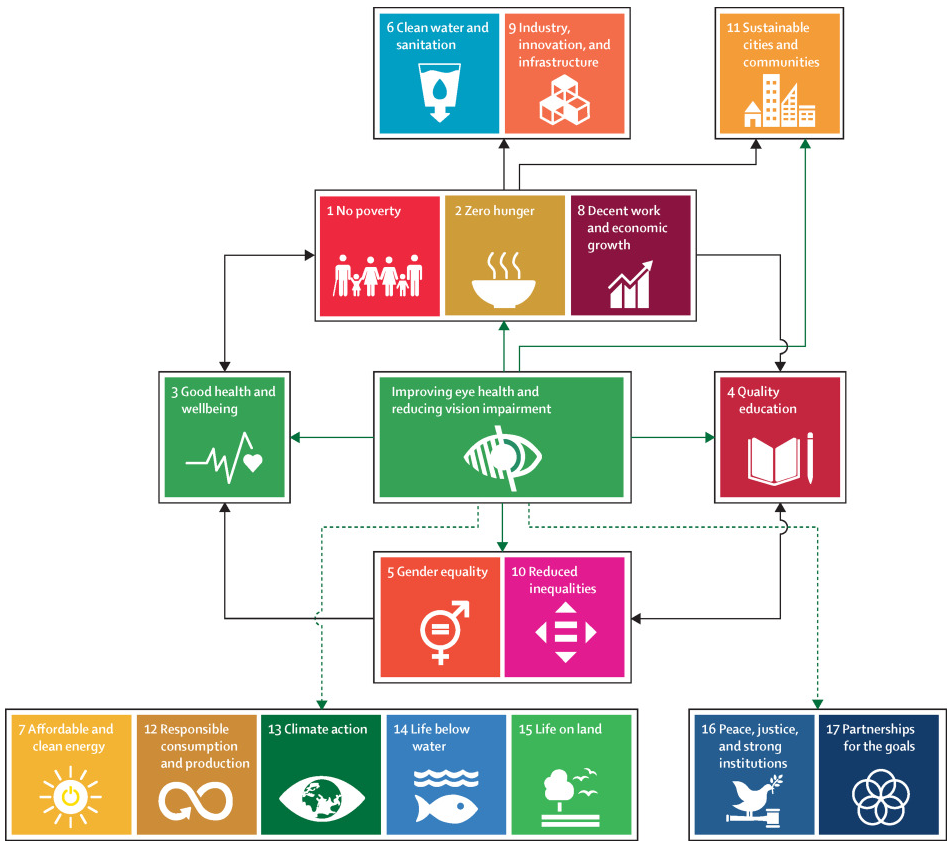
Note: Solid arrows show direct relationships, dotted arrows show indirect ones.
An analysis of the health care carbon footprint globally shows where the various nations stand in the generation of greenhouse gas emissions, including Ireland, the UK and other European countries. Based on Ireland’s climate change performance and analysing the health system and public hospitals in Ireland, Kirk proposed recommendations to inform Ireland’s “Climate Action Plan”, which is outlined in the resource (Kirk et al, 2021).
This module explores sustainable practices in hospitals and surgery and focuses on ophthalmology with global examples and the response of the Irish College of Ophthalmologists (ICO) in this respect.
Module 9. Advocacy and policy in ophthalmology within the framework of GCDE
This module explores the critical role of advocacy and policy in advancing global eye health, framed through the lens of Global Citizenship and Development Education (GCDE). It highlights how educators can empower students to address the underlying social determinants of health, challenge power structures, and promote social justice in the field of ophthalmology.
Advocacy in ophthalmology involves efforts to influence public policy and resource allocation decisions within political, economic, and social systems. A pivotal document is The World Health Organization’s (WHO) World Report on Vision (2019), which can be found at <https://doi.org/doi:10.1016/S2214-109X(20)30488-5> (Opens in a new tab or window).
In 2021, Zoë Mullan interviewed Prof Matthew Burton, the lead of The Lancet Global Health Commission on Global Eye Health, about the highlights of the report. The podcast is available below (24min):
The resource includes 10 key messages for policymakers engaged in GCDE and Ophthalmology, and presents the three elements of the “2030 In Sight: Ending avoidable sight loss” published by The International Agency for the Prevention of Blindness (IAPB):
- ELEVATE vision as a fundamental economic, social and development issue: Influence political will and secure new forms of funding. Set new government targets. Include educational settings. Target employers. Implement sustainable development framework.
- INTEGRATE eye health in wider health care systems: Deliver Integrated People-Centred Eye Care (IPEC). Implement Universal Health Coverage. Train diverse and resilient workforce. Embrace technology.
- ACTIVATE consumer and market change: Combat negative stereotyping. Build public-private partnerships. Create regulatory environment (IAPB, 2021).
The module discusses advocacy in ophthalmology with case study analysis and revises the role of students and educators in advocacy, suggesting some teaching strategies.
 This section ends with evaluation of advocacy efforts and advocacy in the community, an example of which is the “Our Vision, Our Voice” campaign, dedicated to creating positive change for future college students with vision impairments. The campaign was led by “Féach” (Irish for Look), an Irish charity that offers support for parents of blind and visually impaired children.
Information is available at <https://feach.ie/2024/07/our-vision-our-voice/> (Opens in a new tab or window).
Module 10. Research for global eye health through a GCDE lens
This module explores various research methodologies, the importance of funding, and the ethical considerations involved in global eye health research. It also offers strategies for educators to engage students in critical reflection on these topics.
“Research is crucial to advancing global eye health; specifically, to understand population eye health needs, identify effective interventions, optimise delivery, and support effective advocacy (Burton et al., 2021).”
Research methodologies are approached philosophically and briefly explained from the positivist and interpretivist perspectives.
The positivist approach includes quantitative methods that are essential to support practitioners and decision-makers in their actions to provide health care. From an interpretivist approach, the qualitative research method considers people’s perceptions and experience, analysing social, emotional and cultural contexts.
A revision of funding for eye health research shows the main trends with an overview of the main sources of funding, including the mention of Health Research Board (HRB) in Ireland, the Medical Research Council (MRC) in the UK, and the National Institutes of Health (NIH) in USA. Philantropic and private sector funding are also reviewed.
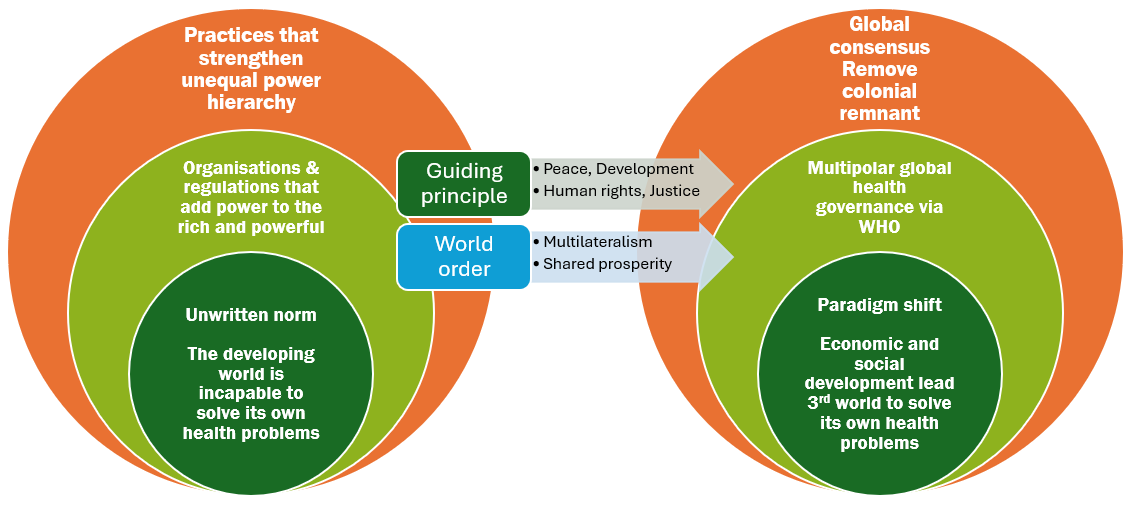
International funding collaborations in health are increasingly important. Researchers describe the benefits of moving away from models that started when Low- and Medium-Income Countries (LMICs) were “colonies” of powerful and rich countries. A movement known as “Decolonising global health”.
Module 11. Assessments and feedback though a GCDE lens
This module focuses on how assessments can not only measure learning but also promote the values of GCDE, such as equity, critical thinking, and social responsibility.
Assessment for Learning (AfL) is a dynamic teaching approach that emphasizes feedback as an integral part of the learning process. The key features are:
- Empowerment: Involve students in their learning process. This aligns with GCDE’s goal of promoting agency and active participation in global issues.
- Reflective practice: Reflection on their learning helps students connect theoretical knowledge with real-world applications, particularly in understanding global health challenges.
- Social responsibility: Focus the assessment on the social implications of ophthalmology practice, to lead students to consider how their future practice can contribute to reducing global health disparities.
Cambridge University Press presents an interview with education experts on assessment for learning:
Audio
Audio: Brighter Thinking Pod, Episode 12: Assessment for learning
Publisher / date: Cambridge University Press, Education, 2021.
Length: 25min.
Description: On the topic of assessment for learning, host Tamsin Hart interviews Mark Winterbottom, Senior Lecturer in Science Education at the Faculty of Education, University of Cambridge, Sarah Talbot-Joyce, Education Manager for Teaching and Learning, and Melise Camargo, Training Materials Manager, both from Cambridge Assessment International Education.
Link: <https://www.youtube.com/watch?v=DNTNzYKGbYY> (Opens in a new tab or window).
Other methods of assessment include Reflective journals, Peer assessment and Peak projects.
Module 12. Empowering global eye health through GCDE
This resource “GCDE meets Ophthalmology” has aimed to equip educators, students, and practitioners with the knowledge, skills, and perspectives necessary to address the challenges of global eye health in an equitable and socially just manner.
A re-capitulation of core principles, reflection on the role of educators and the challenges and opportunities to promote global eye health, ending in a call to action.
This resource is more than a collection of information; it is a call to action. Students, educators, and practitioners alike are urged to see themselves as agents of change. Everyone has the potential to drive positive transformation in global eye health by applying the principles of GCDE in their work.
References for “GCDE meets Ophthalmology”
The References section corresponds to the in-text citations that support the arguments presented in “GCDE meets Ophthalmology”. This comprehensive list of more than 200 entries may be considered as an additional resource because it provides the reader multiple avenues to explore sources that may be useful to contribute to the learner’s own analysis and conclusions.
Full resource: “Global Citizenship Development Education meets Ophthalmology” is available at
<http://praxisucc.ie/wp-content/uploads/2024/10/Oph-GCDE_v7_colours_oct2024.pdf>
(Opens in a new tab or window. To download, right-click and “Save link as”: PDF = 9MB.
If you see the message “This file can’t be downloaded securely”, please hover over the message to the ellipses “…” and select “keep”, and “Keep anyway“).
=== END of Resource: GCDE meets Ophthalmology ===
© 2025. All rights reserved. Praxis UCC.