
By Dr Gertrude Cotter
On 28 May 2025, the Praxis Project at University College Cork hosted an online research symposium as part of Praxis Week. For nearly two hours, academics, students, and community partners from across the world came together to share, reflect, and imagine new ways of working towards global justice in higher education.
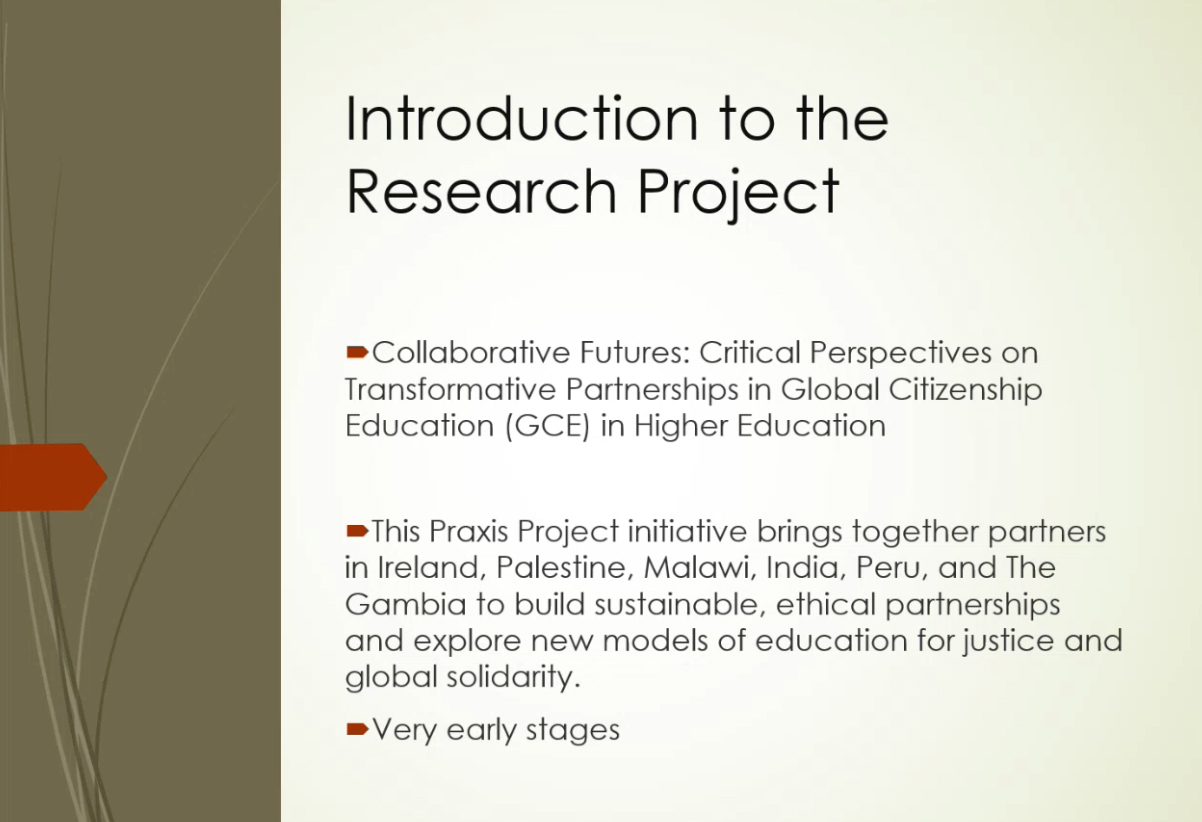
Praxis week 2025 – Introduction to the research project.
The focus of this symposium was on the Praxis Project’s new partnership research initiative, a collective effort linking UCC staff with partners in Palestine, Malawi, India, Peru, and The Gambia. Each partnership is exploring what international collaboration can bring to Global Citizenship and Development Education (GCDE), not in abstract terms, but through concrete projects grounded in real challenges and opportunities.
From Charity to Feminist Federation
ActionAid has transformed from a traditional charity into a feminist, justice-led global federation, now operating in 71 countries. This shift moves power to the Global South and centres the voices of those historically excluded from development decisions.
Why partnerships?
Over the past three years, Praxis research with UCC staff and students revealed a strong desire to engage with international partnerships as a way of deepening GCDE. Participants wanted collaborations that were mutual, sustainable, and transformative. In response, Praxis awarded small grants to four interdisciplinary teams, each working with colleagues and communities in different regions. These teams now form the basis of a wider study into how partnerships can foster learning, action, and justice in higher education.
Palestine: resilience and reconstruction
The first presentation, led by Elaine O’Mahony and colleagues, highlighted collaboration with Birzeit University, the Lajee Cultural Centre in Bethlehem, and the Islamic University of Gaza. In the face of devastation, including the destruction of libraries, universities, and academic life, Palestinian partners emphasised the urgent need for digital resources, online learning tools, and infrastructural support. Irish colleagues are working on providing digital repositories, training, and innovative solutions like InfoSpots (portable devices enabling safer internet access).
Speakers including Mejd Azda (Lajee Centre) and Dr Amani Ahmed (Islamic University of Gaza) reminded participants that education is not only under attack but also a site of resilience. They called for partnerships that respect the agency of Palestinian institutions and support long-term reconstruction.
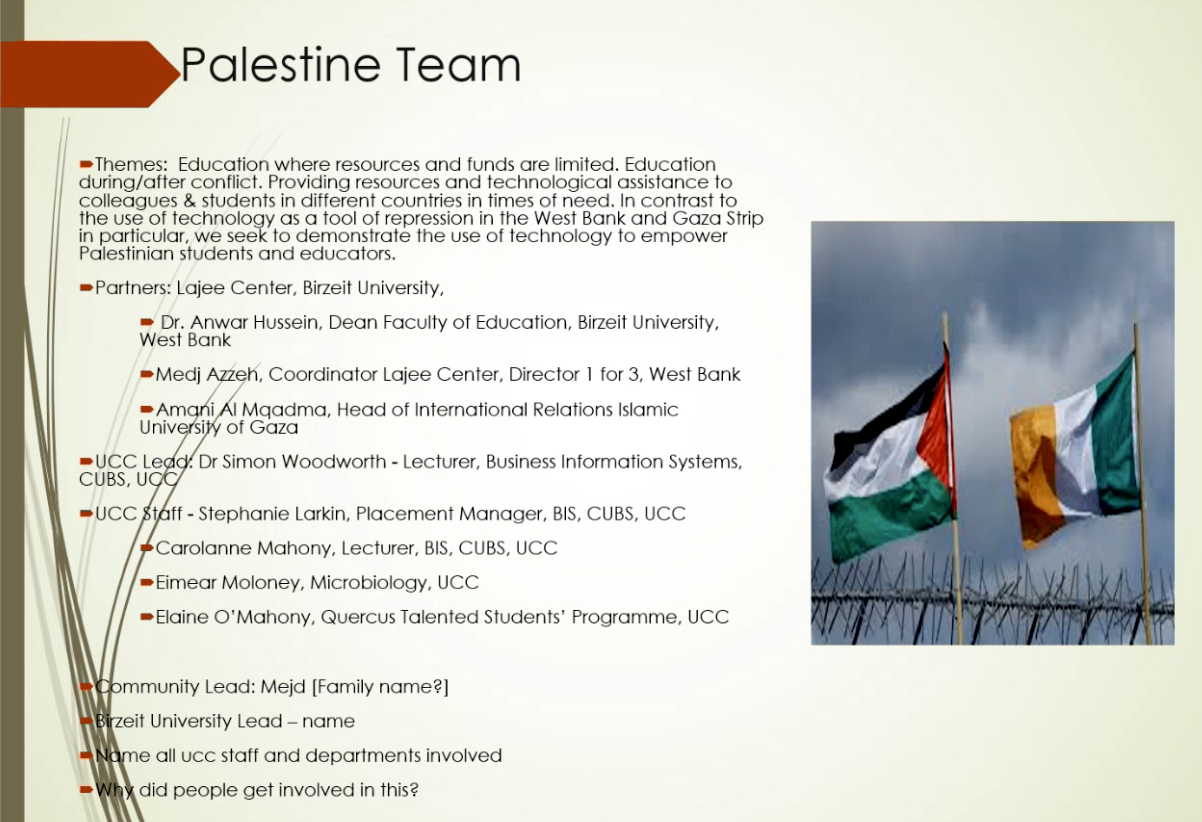
Praxis week 2025 – Palestinian team.
Participation and Radical Hope
Balfe urged moving beyond reliance on the state to building resilient, community-led, care-based economies. She called for courage to replace neoliberal capitalism with feminist economies, redistributive justice, and transnational solidarity.
Malawi, India, and Ireland: Democracy and theatre
The second project brought together colleagues from UCC, the University of Malawi, and the Yalgar Theatre Group in India. Led by Prof. Manfred Schewe, Dr Fionn Woodhouse, Dr Chiku Manthalu, and Sukesh Arora, this team is using applied theatre to explore democracy, participation, and civic engagement.
Sukesh will work with Yalgar, a Dalit-led cultural collective in Mumbai, to develop theatre workshops on justice and democracy. These will then be adapted for students in Malawi and Ireland, testing how performance-based methods can foster critical citizenship. As Chiku noted, young people in Malawi often feel excluded from politics due to corruption and unemployment. Theatre, he argued, may help open new democratic spaces for reflection and action.
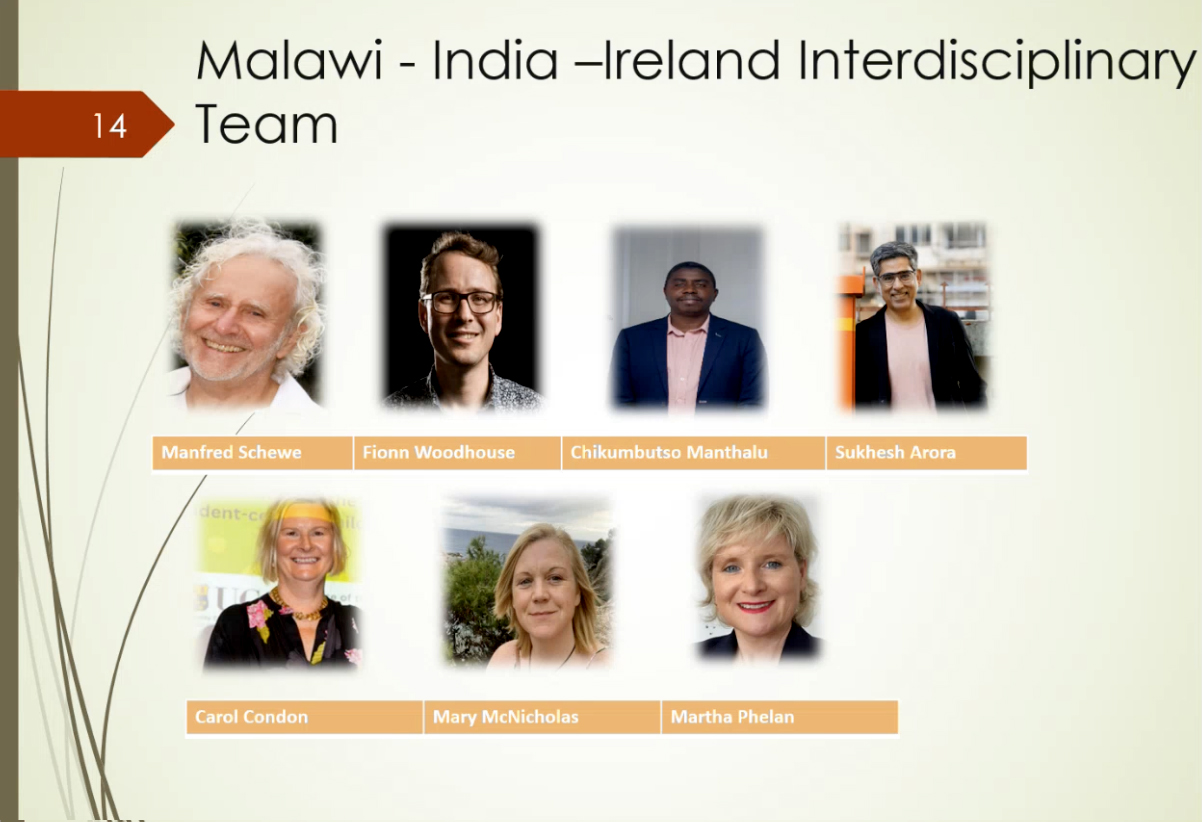
Praxis week 2025 – Malawi – India.
Peru and Ireland: indigenous knowledges and the rights of the land
The third partnership, presented by Dr Ceire Broderick, connects UCC with the Federación Regional de Mujeres Indígenas de Ayacucho (FREMIA) and the Centro de Derechos de los Pueblos Indígenas (CEDPI) in Peru.
This project centres on indigenous knowledge, sustainability, and Mother Earth’s rights. Indigenous leader Melania Canales emphasised the importance of revitalising ancestral technologies and cosmologies for protecting the land, while Dr Sulma (CEDPI, Lima) highlighted the need for reciprocal South–North dialogues.
The team plans bilingual outputs, including academic publications and more accessible formats such as oral testimonies and videos, recognising that Quechua culture is primarily oral. Early discussions revealed the importance of meeting communities where they are, whether through student visits to rural territories or by adapting methods to linguistic and cultural contexts.
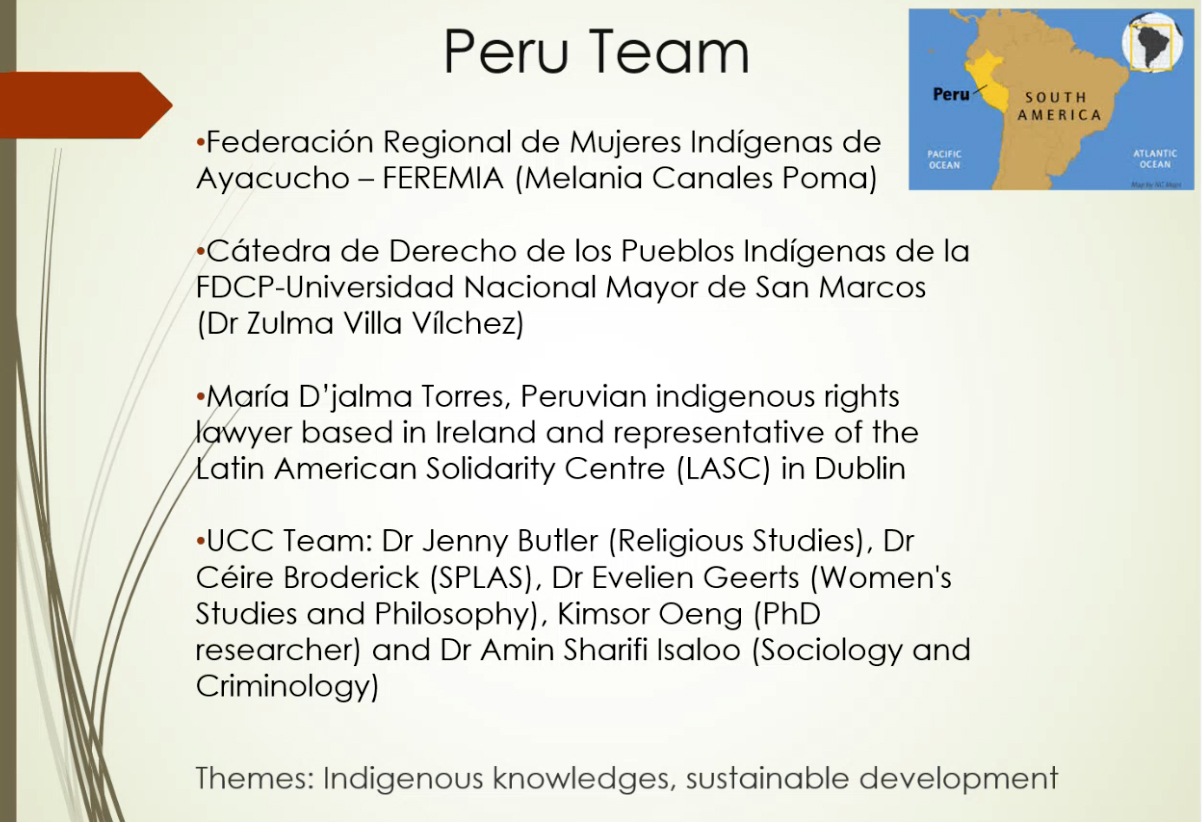
Praxis week 2025 – Peru team.
The Gambia: planning for sustainable futures
Finally, Dr Brendan O’Sullivan and Dr. Stephen Thornhill shared the beginnings of their project in The Gambia, working with retired planners and local government officials. Using spatial planning as a lens, they are examining how sustainable development challenges manifest in cities.
This project will draw on testimonies from young people, women in horticulture, and long-serving civil servants to create new development education resources. By revisiting lessons from the 1980s alongside contemporary realities, the team hopes to show how decisions in one part of the world continue to affect lives in another.
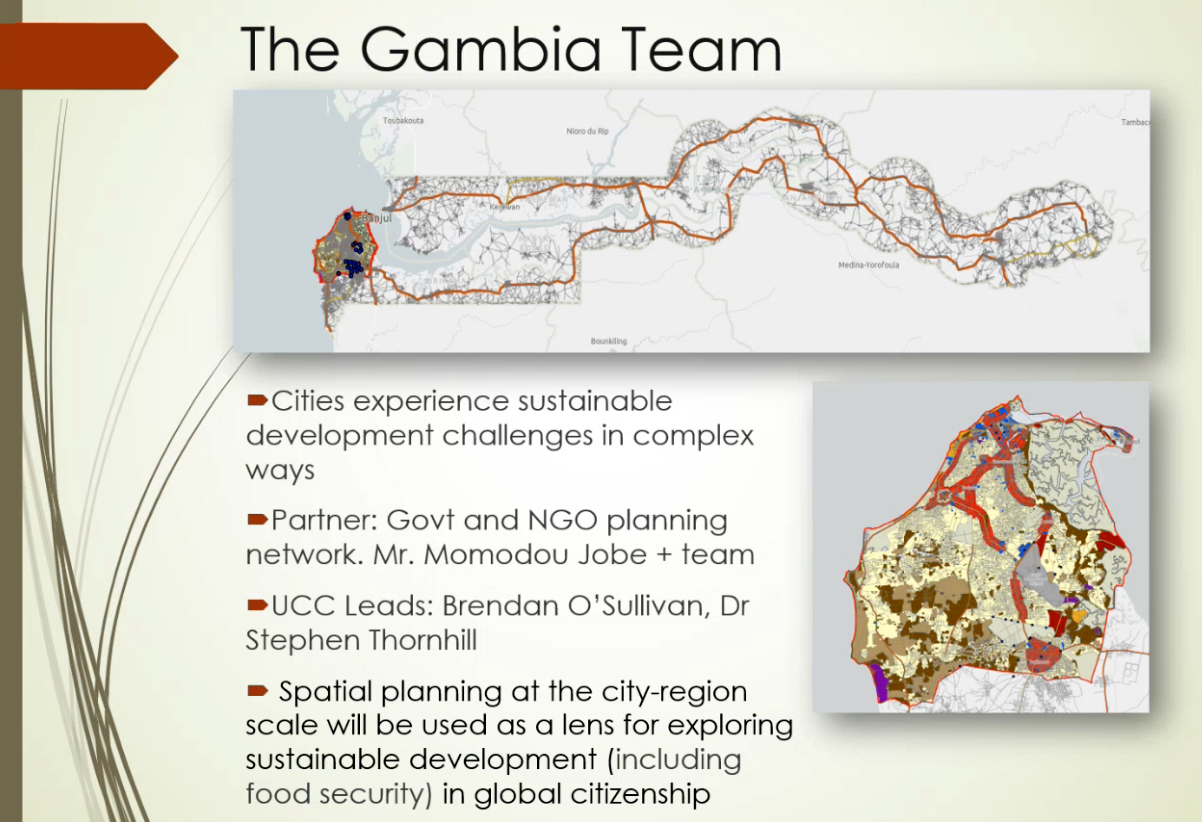
Praxis week 2025 – Gambia team.
Reflections and next steps
As symposium chair, Dr. Gertrude Cotter noted, what emerged was not just four distinct projects but a collective experiment in rethinking what partnership means in higher education. Questions raised included:
- What defines a successful international partnership in GCDE?
- How can partnerships challenge power imbalances and colonial legacies?
- In what ways can collaborative projects promote justice, sustainability, and solidarity?
The event concluded with a sense of energy and shared purpose. While much work lies ahead, participants agreed that bringing these diverse projects together creates a living laboratory for global justice education.
As one participant put it, Praxis Week offered “a map in the making”, a reminder that higher education can be a site not just for knowledge, but for solidarity, creativity, and transformation.
Dr. Gertrude Cotter: Lecturer in Global Citizenship Education at UCC and academic coordinator of the Praxis Project.
