
Contents (go to): Introduction ¦ Objective ¦ Instructions ¦ Additional activities

A resource on Irish and Global Activism, Policy and Theory
Author: Dr Gertrude Cotter
Principal investigator: Dr Gertrude Cotter
The Praxis Project, School of Education, UCC, September 2024

 Full resource: “Always evolving: The history of development education through timelines” is available to download in PDF format at
<http://praxisucc.ie/wp-content/uploads/2024/10/Timeline_v3_colours_17oct2024.pdf>
(Opens in a new tab or window. To download, right-click and “Save link as”: PDF = 1MB.
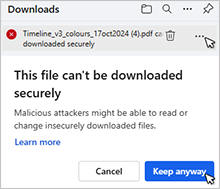
If you see the message “This file can’t be downloaded securely”, please hover over the message to the ellipses “…” and select “keep”, and “Keep anyway“).
Introduction
The idea for this resource, Always Evolving: The History of Development Education Through Timelines – A Resource on Irish and Global Activism, Policy and Theory, was born out of my experience as a lecturer at University College Cork (UCC), where I recognised a need for a versatile tool to help educators and students explore the history of Development Education. I saw an opportunity to create a resource that would illustrate the journey of Development Education in Ireland and globally, integrating perspectives from activism, academia, and policy. This resource aims to foster a deeper understanding of how these dimensions have evolved and intersected over time.
The development of this resource was influenced by various sources. The timelines in 80:20 Development in an Unequal World, edited by Tony Daly, Ciara Regan, and Colm Regan, served as an important inspiration, as did the comprehensive analysis in Mapping the Past, Charting the Future by Fiedler, Bryan, and Bracken (2011), which reviews the Irish government’s engagement with Development Education. Additionally, the concept took inspiration from the “Irish Global Solidarity in 100 Objects” exhibition, hosted by developmenteducation.ie, which showcases Ireland’s engagement with global cultural, social, and political issues. This exhibition’s approach of connecting objects to significant moments in history offered a model for presenting Development Education as a dynamic, evolving field.
I am deeply grateful to the staff and students at UCC who participated in piloting this resource across various disciplines. Their engagement and feedback have been instrumental in refining the activities, ensuring they are accessible, interactive, and suitable for different educational contexts. The resource is a collaborative effort aimed at encouraging critical discussions on global justice and the history of Development Education.
The 5 timeline resources that accompany this section can be found below under “Materials needed”.
Objective of this resource
This resource is designed to help students and participants explore the history of Development Education through a collaborative, hands-on timeline activity. The primary aim is to engage third-level educators and students from all disciplines in critical discussions around global justice issues, but the resource is also adaptable for use in second-level education, youth and community groups, and adult education settings.
Whether used in a university classroom, a community workshop, or a youth program, this resource provides flexibility, allowing facilitators to tailor it to different age groups, interests, and learning levels.
The first section below explains how we, staff and students at UCC, used the five timelines to help discuss and understand the trajectory of Development and Global Citizenship Education in Ireland and internationally.
Activity Guidelines
This resource offers a flexible framework for exploring the history of development education and global activism through a timeline-based approach. While we outline a specific way to use the materials below, we encourage readers to adapt the resource to suit their unique context. Feel free to use one or all of the five timelines, select a few key A4 pages, or add your own historical events and developments. The timelines provided are a sample of significant moments, but you should feel free to include what you consider important for your audience. For further ideas on how to customize the activity, see Section 2 below.
Materials needed
- Timeline pages: Can be laminated or mounted on cardboard for durability, or simply copied onto A4 pages.
 The links below open in a new tab or window. To download, right-click and “Save as” (PDF average size 4MB).
- Orange Timeline: Action for global justice internationally.
Available at <http://praxisucc.ie/wp-content/uploads/2024/10/res6_timeline_01_orange_International_Final_v2.pdf>. - Pink Timeline: Theories of education.
Available at <http://praxisucc.ie/wp-content/uploads/2024/10/res6_timeline_02_pink_Education-theory_Final_v2.pdf>. - Blue Timeline: Government Development Education Policy and NGO Influence.
Available at <http://praxisucc.ie/wp-content/uploads/2024/10/res6_timeline_03_blue_GCDE-policy_Final_v2.pdf>. - Purple Timeline: Development Theory.
Available at <http://praxisucc.ie/wp-content/uploads/2024/10/res6_timeline_04_purple_Development-theory_Final_v2.pdf>. - Green Timeline: Action for Global Justice in Ireland.
Available at <http://praxisucc.ie/wp-content/uploads/2024/10/res6_timeline_05_green_Activism-in-Ireland_Final_v2.pdf>.
- Orange Timeline: Action for global justice internationally.
- Space for laying out the timelines.
- Marker pens for annotations (optional).
Activity instructions
Group formation
Divide participants into small groups, with each group assigned one of the five timeline colours:
- Orange: Action for global justice internationally.
- Pink: Theories of education.
- Blue: Government Development Education Policy and NGO Influence.
- Purple: Development Theory.
- Green: Action for Global Justice in Ireland.
Each group represents a distinct theme related to development education and activism. Assign each group to explore the timeline corresponding to their theme.
Timeline creation
Groups collaborate to create their timeline by arranging events, theories, or policies in chronological order using the assigned pages.
The purple pages on Development Theory, are a bit more complex than other sections. It may be helpful to consider giving the purple pages to participants who can handle the complexities of this section and the importance of theoretical foundations. It may not be suitable for younger age groups or people with less academic experience.
Encourage participants to engage in critical dialogue about the significance of key events. Ask them to discuss why certain events or policies may have been turning points or what broader trends they might signify.
Depending on time and group size, participants can choose to add new events or integrate other historical moments relevant to their timeline’s theme. This customisation allows participants to connect the resource to their own experiences or fields of interest.
Timeline presentation and discussion
After completing their timeline, each group presents it to the broader class or workshop. Encourage them to explain why they selected certain events or theories as most important, as well as any challenges they faced when deciding the order or significance of events.
Open the floor for questions and inter-group discussions. This exchange will help deepen participants’ understanding by exploring different perspectives on the historical developments presented.
Cross-comparison activity
Lay all the timelines side by side in a grid format to facilitate cross-comparison.
Groups rotate around the room, examining the other timelines and identifying similarities, differences, or connections.
Facilitate a full-group discussion on how global activism, development theories, educational policies, and actions in Ireland may have influenced each other over time. Discuss potential reasons for these patterns and explore any regional or thematic overlaps.
Reflective analysis
Ask participants to reflect on the interconnectedness of events in different timelines. For example, consider how activism in one region may have influenced development theory, or how shifts in education policy could have been shaped by global movements.
For more advanced groups, encourage participants to integrate all the timelines into a single, comprehensive timeline. They can highlight interconnections, global influences, and the ways different areas of development education have evolved together.
Some lessons we have learned
Throughout the piloting of this resource, we’ve observed that the timeline approach facilitates deep engagement with complex historical developments. By working collaboratively, participants not only learn about the history of Development Education but also practice critical thinking and dialogue. Here are some key takeaways from our experience:
Flexibility is key
Different groups have adapted the resource to fit their particular needs. Some chose to focus on just one or two timelines, while others incorporated additional materials and events to make the content more relevant to their own disciplines.
Encouraging critical dialogue
The timeline activity promotes rich discussions, as participants often challenge the significance or interpretation of certain events. These conversations have proven invaluable for understanding the diverse perspectives within development education.
Revealing interconnections
Laying the timelines side by side has been particularly effective in highlighting how activism, theory, and policy intersect across different contexts. Participants gain insight into the interconnected nature of these domains, and it encourages them to think beyond individual timelines.
Ownership and engagement
Groups who contributed additional events or adapted the timelines to reflect their own experiences reported a stronger sense of ownership over the learning process. This approach enhances engagement and encourages participants to see themselves as active contributors to the history and future of development education.
We encourage you to make this resource your own. Use it in ways that make sense for your particular setting and consider modifying or expanding the timelines to reflect themes that resonate with your audience. For additional activity ideas, see Section 2 below.
Additional activities for different contexts
This resource is designed to be adaptable for various educational settings, from university classrooms to community workshops. Below are ideas for using and customising the timelines to suit different contexts, age groups, and learning objectives. The activities encourage participants to engage critically with historical events, explore connections between activism, policy, and theory, and develop a deeper understanding of Development Education. Facilitators can choose one or more of these approaches or combine elements from different activities.
1. University-level learning
Research extension: Students can conduct research on additional events, theories, or policies not included in the timelines. They can present their findings to the class and integrate these new events into the existing timelines, enriching the historical narrative.
Critical analysis essays: Assign students to write essays on selected events or theories, analysing their historical significance and contemporary relevance. This can be expanded into comparative essays where students evaluate different approaches to activism, education, or policy in various regions.
Debates and discussions: Organise debates around specific historical events, policies, or theoretical perspectives, encouraging students to argue from multiple viewpoints. This helps develop critical thinking and argumentation skills while exploring different sides of a topic.
Cross-curricular integration: Use the resource in disciplines such as Geography, Sociology, or Political Science to illustrate how Development Education issues intersect with other fields. For example, in a Sociology course, students can analyse the social movements that have shaped educational policies or in a Geography class, examine how regional activism influenced development theories.
2. Youth and community groups
Role-play and reenactment: Have participants reenact significant events or debates represented in the timelines, allowing them to step into the perspectives of key historical figures. This can help bring the historical content to life and foster empathy by exploring different motivations and viewpoints.
Creative representation: Encourage groups to create artistic representations, such as posters, dioramas, or digital projects, based on the events and ideas in the timelines. This makes the content more accessible and engaging, especially for younger participants or those in non-traditional learning environments.
Interactive bulletin board: Set up a bulletin board where participants can add new information, photos, or news articles connected to the timeline themes. This can evolve into a living display that grows with the group’s contributions, encouraging ongoing engagement and learning.
Community involvement: Connect the timeline themes to local issues by encouraging participants to link historical events to current community activism or global justice concerns. This might involve community projects, organising local events, or interviewing local activists to add new perspectives to the timelines.
3. Second-level education
Thematic comparison activities: Students can compare different timelines, such as “Global Activism in Ireland” versus “Global Activism Internationally,” to analyse contrasting approaches to activism and policy. This helps them understand regional differences and similarities in the evolution of development education.
Quiz and trivia games: Use the timelines as a basis for creating quizzes or trivia games. This provides a fun and interactive way to reinforce knowledge, test understanding, and spark discussions about historical developments and their significance.
Deep dive studies: Select one timeline (e.g., “Green: Global Activism in Ireland”) for an in-depth study of key events and their impacts. Ask students to explore the timeline in detail, discuss its significance, and research contemporary parallels.
Adding contemporary events: Encourage students to update the timelines by including recent events, policies, or theoretical developments. This helps make the history feel more relevant and connected to the present.
4. Adult education and workshops
Interactive timeline expansion: Invite participants to add their own historical events or personal experiences related to activism, policy, or education. This activity allows for a more personalized learning experience and can foster a sense of ownership and engagement.
Community connections: Encourage participants to explore the links between historical events on the timelines and current global or local issues. Consider involving guest speakers, such as local activists or experts, to discuss the ongoing relevance of these historical developments.
Role-play and reenactment: In workshops, assign roles for participants to explore different historical perspectives, allowing for an immersive learning experience. This can be especially effective in discussing contentious events or policies, as participants can better understand the different viewpoints that shaped them.
Thematic expansion: Ask participants to extend the timelines by adding recent events or relevant contemporary developments that connect to the themes covered. This could include recent policy changes, new social movements, or ongoing global justice campaigns.
=== END of Resource: The history of development education through timelines ===
© 2024. All rights reserved. Praxis UCC.
