Contents (go to): Introduction ¦ Key sections ¦ Part 1: Building themes and teams ¦ Part 2: Methodology application ¦ Conclusion

An educational resource to unpack global justice challenges
Author: Dr Gertrude Cotter
Principal investigator: Dr Gertrude Cotter
The Praxis Project, School of Education, UCC, September 2024

 Full resource: “The Mystery Box Challenge: An educational resource to unpack global justice challenges.”is available for download in PDF format at
<http://praxisucc.ie/wp-content/uploads/2024/12/Mystery-box_v3_colours_19dec2024.pdf>
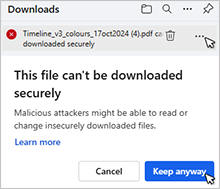
(Opens in a new tab or window. To download, right-click and “Save link as”: PDF = 6MB.
If you see the message “This file can’t be downloaded securely”, please hover over the message to the ellipses “…” and select “keep”, and “Keep anyway“).
Introduction
The Mystery Box Challenge is an engaging, creative method for exploring global justice issues through an interdisciplinary, hands-on approach. This guide provides a condensed overview of how to create, implement, and reflect on a Mystery Box Challenge in an educational setting. It’s designed for educators seeking innovative ways to foster critical thinking, empathy, and global awareness in their students.
Purpose
This educational resource outlines the Mystery Box Challenge, a creative methodology developed by the Praxis Project at UCC to engage staff and students with Global Citizenship and Development Education (GCDE). The resource is designed to encourage critical thinking, creativity, and action-oriented learning while fostering interdisciplinary collaboration around global justice themes.
Key sections
1. Introduction:
- Defines GCDE as a transformative educational framework rooted in critical pedagogy and global justice.
- Aims to empower learners with skills, knowledge, and values to address complex global challenges.
2. Praxis project overview:
- Funded by Irish Aid, it fosters GCDE at UCC through pedagogy, research, and capacity-building initiatives.
- The Mystery Box Challenge was developed as part of Praxis Week 2024 to creatively introduce GCDE concepts.
3. Mystery Box Challenge:
- Concept: Participants receive a box containing materials related to global justice themes. They create meaningful responses and collaborate during a workshop day.
- Objectives: Foster creativity, enhance critical thinking, and promote interdisciplinary collaboration.
- Participation: Engages 30 staff members from various UCC departments in a hands-on, immersive experience.
4. Framing and theoretical lenses:
- GCDE integrates perspectives like social justice, postcolonialism, feminism, intersectionality, and critical pedagogy.
- Emphasizes participatory approaches and action-oriented learning to drive transformative societal change.
5. Implementation steps:
- Part 1: Explores the practical stages of the challenge, including box creation, team-building, workshops, and reflective evaluation.
- Part 2: Provides guidance for adapting the methodology to various educational contexts and embedding GCDE into curricula.
6. Outcomes:
- Increased engagement and understanding of GCDE among participants.
- Facilitated discussions on global challenges, such as environmental justice, gender equality, and decolonisation.
7. Acknowledgements:
- Expresses gratitude to UCC staff, Irish Aid, and other contributors for their support.
8. Appendices:
- Includes IDEA’s Code of Good Practice, lesson plans, and additional resources to support educators in applying the methodology.
Key takeaways
GCDE Methodology: Mystery Box Challenge effectively combines creativity and critical pedagogy to engage participants with global justice themes.
Scalable Model: The resource offers practical guidance for educators to adapt the methodology across disciplines and educational levels.
Collaborative Impact: The challenge highlights the role of higher education in promoting global citizenship and social responsibility.
The resource positions GCDE as a vital tool for fostering informed, empowered, and action-oriented global citizens.
Part 1: Building themes and teams
Introduction
The Mystery Box Challenge was a flagship event of the Praxis Project at University College Cork (UCC), designed to engage university staff in Global Citizenship and Development Education (GCDE) through an interdisciplinary, creative, and hands-on methodology. Held during Praxis Week, the event brought together participants from diverse academic and administrative backgrounds to collaborate on themes of global justice, anti-racism, and social responsibility.
This initiative demonstrated how creative activities can foster critical engagement with complex global issues, offering a model that is adaptable across disciplines and educational levels.
Planning and preparation
Setting clear objectives
The Mystery Box Challenge was conceived with several objectives in mind:
- Deepen collective knowledge of GCDE and global justice issues.
- Foster critical thinking, creativity, and interdisciplinary collaboration.
- Inspire participants to integrate GCDE principles into their teaching, research, and administrative practices.
The Mystery Boxes
Each Mystery Box was curated to include scholarly articles, visual aids, creative materials, and interactive prompts related to specific GCDE themes such as forced migration, economic justice, and cultural resistance. These resources were designed to encourage participants to think critically and empathetically about their assigned topics.

Participant recruitment and distribution
An online registration form was circulated, and 112 staff members expressed interest in participating. Due to resource constraints, the event was limited to 30 participants, who were selected on a first-come, first-served basis. The boxes were distributed to participants a week before the event, allowing them time to explore their contents and prepare their initial reflections.
The event
Workshop day
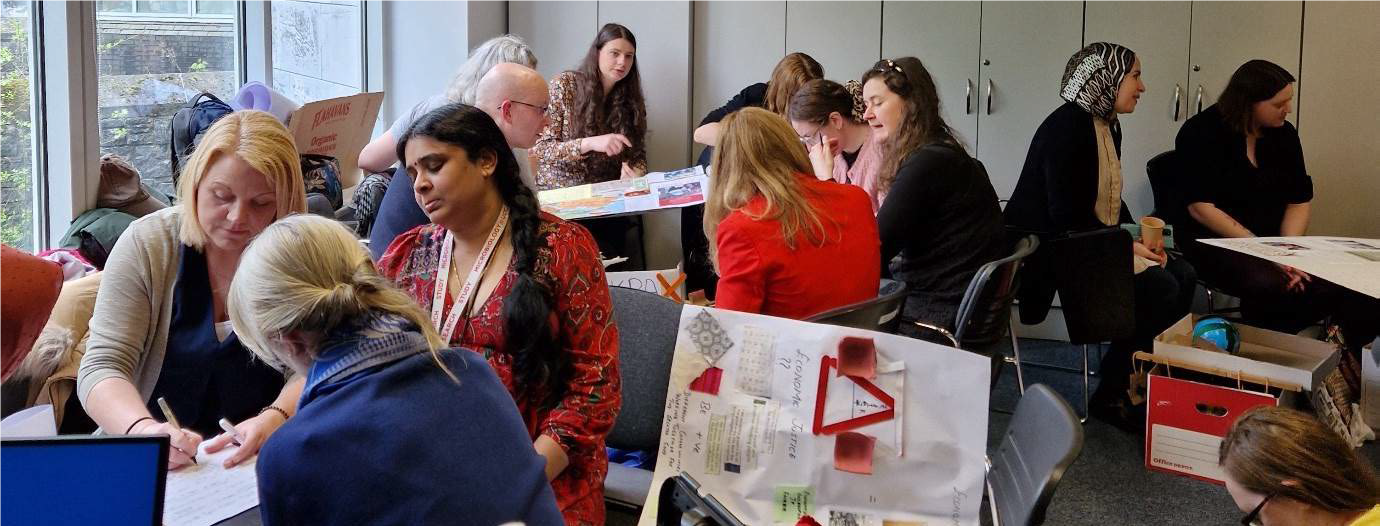
The event took place at a mystery location on campus, adding an element of intrigue. Participants arrived to find themselves grouped into interdisciplinary teams, each associated with a specific theme, such as environmental sustainability, economic justice, or forced migration.
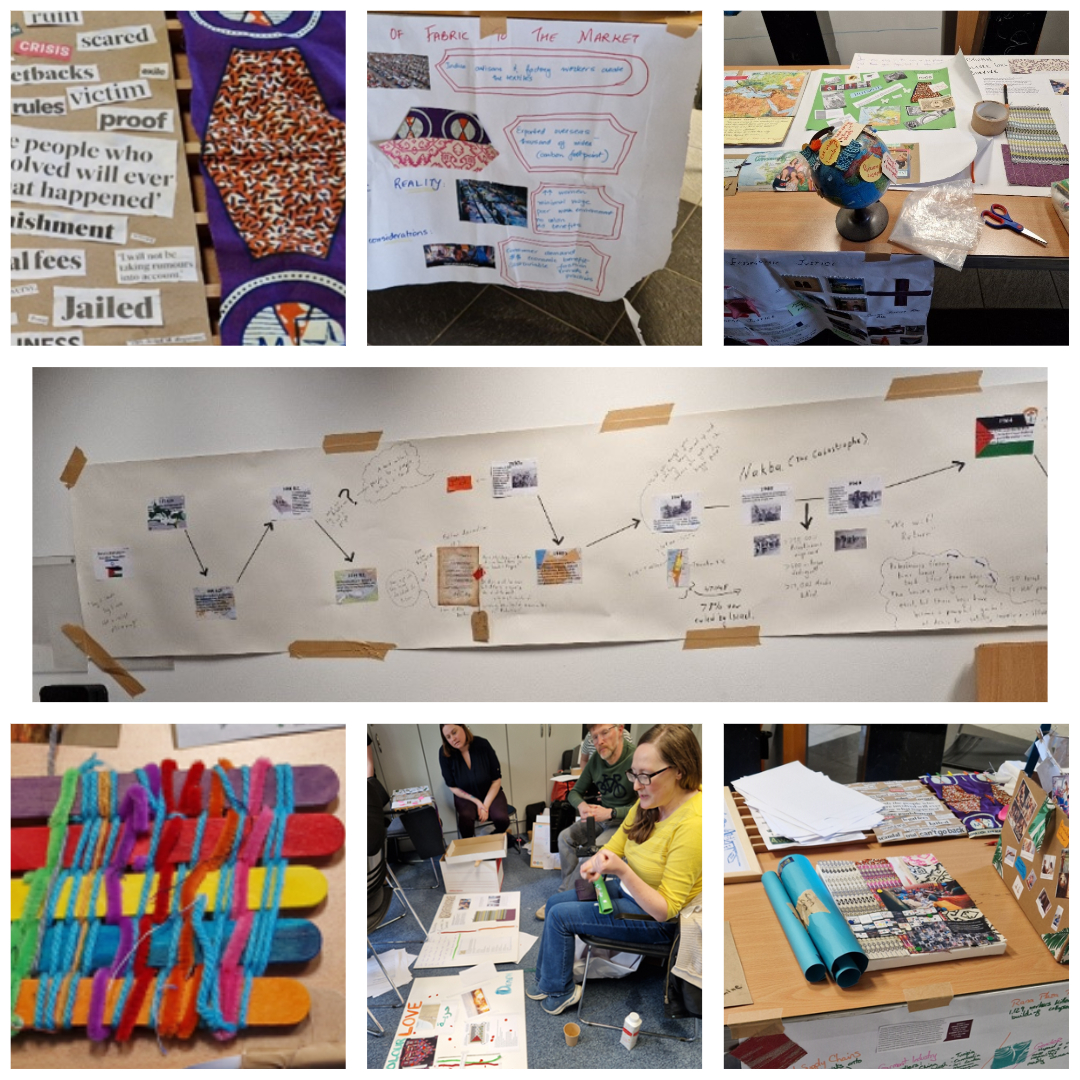
Each participant brought an artefact they had created using the materials in their Mystery Box. Teams then worked collaboratively to combine their artefacts into a cohesive display that represented their theme. Instructions guided teams to:
- Share their individual creations and insights.
- Develop a collective presentation summarizing their key messages and reflections.
- Propose actionable steps for integrating GCDE principles into their professional contexts.
Team projects
1. Forced migration group:
- Created a map of global migration routes, personal stories stitched onto fabric, and a model refugee shelter.
- Focused on the human and systemic challenges of displacement.
2. Economic justice group:
- Explored themes of global trade, care economies, and labor rights through maps, collages, and dioramas.
- Highlighted systemic inequities and proposed actionable steps for fair trade and policy advocacy.
3. Environment group:
- Addressed topics like sustainable development and greenwashing.
- Used visual aids, interactive quizzes, and educational tools to inspire action for climate justice.
4. Palestine group:
- Developed a timeline of Palestinian history and an art display exploring resistance through cultural expression.
- Highlighted the role of storytelling and cultural preservation in advocacy.
5. Stories of change group:
- Created collages and interactive exhibits showcasing personal and community-led transformations.
- Focused on grassroots movements and the power of individual narratives.
6. Framing the World group:
- Explored how individuals interpret global issues through unique lenses.
- Although abstract, this experimental approach provided valuable insights into diverse worldviews.
Public exhibition
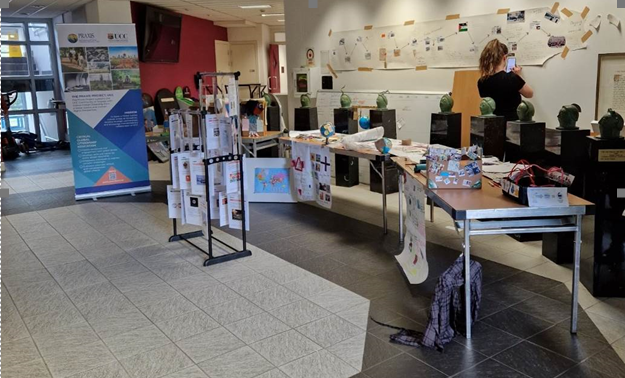
Following the workshop, participants set up their collaborative projects in a public exhibition space on campus. The exhibition featured:
- Interactive displays and artefacts created by each team.
- A timeline of GCDE history, providing context for the issues addressed.
- Reflection prompts inviting visitors to engage with the themes and propose their own actions.
The exhibition attracted a wide audience, sparking meaningful conversations about global justice and the role of education in fostering change.
Feedback and evaluation
A post-event survey revealed overwhelmingly positive feedback:
Creativity and engagement:
Participants praised the hands-on approach and the opportunity to collaborate with colleagues from diverse disciplines.
Critical thinking:
Many noted that the activity deepened their understanding of global justice issues.
Action-oriented learning:
Participants felt inspired to integrate GCDE principles into their work and personal lives.
Areas for Improvement:
- Clearer instructions and more structured facilitation for some activities.
- Larger venues to accommodate more participants and facilitate collaboration.
- Extended time for group discussions and reflections.
Part 2: Application of this methodology for educators
The Mystery Box Challenge offers third-level educators a dynamic and creative way to bring Global Citizenship and Development Education (GCDE) into their classrooms or workshops. By introducing complex global issues in an engaging, hands-on format, this methodology can help students develop a deeper understanding of global justice themes while fostering critical thinking, interdisciplinary learning, and action-oriented outcomes.
In this section, you will find examples of ways to adapt the Mystery Box concept to your own context. Additionally, some lesson plan examples are provided in Appendix 3.
2.1. Bringing the Mystery Box Challenge to higher education
For educators in higher education, the Mystery Box Challenge can be a powerful tool to introduce students to GCDE in a meaningful and impactful way. Here are some examples of how the methodology could be implemented:
As a standalone project:
In a course on global justice, international relations, or social responsibility, the Mystery Box Challenge can serve as a central project spanning several weeks. Each box would contain materials related to a specific GCDE theme (e.g., migration, climate change, economic inequality). Students would work individually or in groups to explore their assigned theme, create a project based on the contents of the box, and present their findings in a final class session or public exhibition.
As Part of an existing course:
The Mystery Box Challenge can be seamlessly integrated into any course focusing on global issues, development, or ethics. For instance, in a political science class, a mystery box on international human rights could encourage students to investigate the legal, social, and cultural dimensions of a case study. In a business course, students could analyze the ethical implications of global supply chains and propose sustainable business solutions.
In interdisciplinary courses or workshops:
The collaborative nature of the Mystery Box Challenge makes it an excellent fit for interdisciplinary learning environments. In a university-wide initiative like Praxis Week, educators from different departments can collaborate to use mystery boxes to introduce students to GCDE from multiple perspectives. For example, a box could combine elements of sociology, environmental science, and economics to explore the global impacts of climate change, encouraging students from diverse disciplines to collaborate on creative solutions.
Examples across disciplines
Social Studies/History: Use the challenge to examine historical and contemporary global issues such as migration, colonialism, or conflict. Mystery boxes can include historical documents, case studies, or artifacts, allowing students to critically assess how past events shape modern society.
Environmental Science: Tailor the boxes to focus on sustainability, biodiversity, and climate change. Students can be tasked with mapping global environmental challenges, creating models of sustainable solutions, or exploring the links between social justice and environmental degradation.
Economics/Business: Analyze global economic systems, focusing on fair trade, corporate social responsibility, or economic justice. Students could investigate the ethical dimensions of production and consumption or design business models that prioritize sustainability and social justice.
Art and Design: Engage students in creative expressions of cultural identity, resistance, and global justice. Mystery boxes can include materials that inspire visual or multimedia projects, allowing students to explore global themes through artistic representation.
Language and Literature: Encourage students to explore global perspectives through literature, poetry, or storytelling. Boxes can include works from marginalized voices or different cultures, fostering empathy and cross-cultural understanding through narrative exploration.
2.2. Facilitating Critical Thinking
The Mystery Box Challenge is designed to push students beyond surface-level engagement, fostering deep critical thinking and analysis. Through this methodology, students actively engage with the contents of their mystery boxes, analyze their relevance to global themes, and apply their findings to real-world issues.
Educators can enhance critical thinking by encouraging students to:
Analyze the contents of the box:
What do the materials suggest about the theme? How do they connect to broader global challenges?
Critique global power dynamics:
Who benefits from current systems? Who is marginalized or oppressed? Students can examine issues such as wealth inequality, environmental degradation, or human rights abuses through this critical lens.
Reflect on personal responsibility:
How are they, as global citizens, implicated in these issues? What actions can they take to address these challenges?
The reflective aspect of the challenge allows students to articulate their thoughts through group discussions, presentations, or written reflections, deepening their engagement with GCDE themes.
2.3. Encouraging action-oriented learning
One of the core principles of GCDE is to inspire students not just to learn about global issues but to take informed action to address them. The Mystery Box Challenge naturally lends itself to action-oriented learning, allowing students to move from theoretical understanding to practical solutions.
Educators can use the challenge to:
- Encourage Advocacy: After exploring their mystery box theme, students can create campaigns, presentations, or social media projects to raise awareness about the issue.
- Propose Solutions: Students can develop proposals for real-world initiatives or community projects that address the global challenges highlighted in their boxes.
- Engage in Service Learning: Partner with local NGOs or community organizations to allow students to apply their knowledge in practical ways, whether through volunteer work, fundraising, or organizing events that address the issues they’ve explored.
This approach helps students feel empowered and capable of contributing to positive change, reinforcing the belief that they can be proactive global citizens.
2.4. Adapting the methodology for other educational settings
While the Mystery Box Challenge was initially designed for university-level students, it is highly adaptable for use in primary and secondary schools, as well as community and youth groups.
Primary Schools:
- For younger learners, simplify the complexity of the themes to focus on age-appropriate global issues, such as environmental sustainability (e.g., “How can we help save the planet?”) or social inclusion (e.g., “What does it mean to be kind and fair to others?”).
- Include picture cards, simple fact sheets, craft materials, and games in the mystery boxes to help children engage with the themes in a hands-on and playful manner.
- Guide students in creating artwork, posters, or simple projects that reflect their learning, encouraging teamwork and creativity.
Secondary Schools:
- Secondary students can handle more complex topics, such as climate change, human rights, or global poverty. Integrate the challenge into subjects like geography, history, or civics to provide students with a practical approach to learning about global issues.
- Include newspaper articles, case studies, interactive materials, and prompts for students to conduct their own research or discussions in the boxes.
- Encourage group projects that require students to present solutions or propose action plans for global challenges, fostering leadership, critical thinking, and presentation skills.
Community and Youth Groups:
- In informal education settings, such as youth groups or community organizations, the Mystery Box Challenge can engage young people with global justice issues in a creative and collaborative way.
- Tailor the boxes to themes relevant to the community or the group’s interests, such as social justice, environmental action, or global interconnectedness.
- Use the challenge to spark
Conclusion
The Mystery Box Challenge successfully demonstrated the power of creativity and collaboration in addressing complex global issues. By engaging participants in an immersive and reflective process, the event not only deepened their understanding of GCDE but also inspired actionable change. This methodology holds great potential for adaptation in diverse educational and professional contexts, making it a valuable tool for fostering global citizenship and development education.
Full resource: “The Mystery Box Challenge: An educational resource to unpack global justice challenges.”is available for download in PDF format at
<http://praxisucc.ie/wp-content/uploads/2024/12/Mystery-box_v3_colours_19dec2024.pdf>
(Opens in a new tab or window. To download, right-click and “Save link as”: PDF = 6MB.
If you see the message “This file can’t be downloaded securely”, please hover over the message to the ellipses “…” and select “keep”, and “Keep anyway”
== END of The Mystery Box Challenge ==
© 2025. All rights reserved. Praxis UCC.
